
I’ve been doing annual reviews since 2015. They’ve always involved walking, writing, rereading old notes, and trying to make sense of a year that already feels like it’s slipping into memory.
I’m trying something different this year.
I’m still walking. I’m still reflecting. But instead of writing everything down first, I’m talking—out loud—and letting AI help me process what comes next.
Walking, Talking, and Letting Thoughts Surface
Over the last few weeks, I’ve spent a lot of time walking in the park and voice‑journaling. I started with the Lifebook areas, one by one, talking through how each area felt over the past year. Then I did the same for my ten values.
No outline. No structure at first. Just letting thoughts come out in the order they wanted to show up.
That part felt familiar. Walking loosens things up. What’s new is what I did afterward.
Using AI to Reflect Back—Not Replace Thinking
Once I had those voice journals turned into text, I didn’t ask AI to summarize my year. Instead, I had a conversation with it about what I was trying to do.
I explained the exercise’s intent. Then I asked it to help me create prompts—questions I could reuse—to analyze each journal and eventually consolidate them into a single reflection document.
The results surprised me, in a good way.
Some of the connections it surfaced were things I’ve been circling for years. I recognized them immediately because I’ve written about them before. AI didn’t invent those—it noticed them because I had already put them into words.
But it also did something else: it showed me those same connections from slightly different angles. Different lenses. Different framings.
That was enough to trigger new thoughts of my own. And that’s where the value really was.
Noticing Tensions I Hadn’t Named Yet
One thing that stood out was how clearly it highlighted tensions between values.
Not judgments. Not prescriptions. Just tensions.
Some of those might be false positives—after all, AI can only work with what I’ve given it. Many of my older reflections still live in handwritten notebooks I haven’t digitized yet. That context matters.
Still, seeing those tensions written out prompted good questions—the kind of questions that don’t need immediate answers but are worth sitting with.
That alone made the exercise worthwhile.
This Is Still an Incomplete Picture—and That’s Okay
What I’ve done so far is just one slice of the year. Next, I’ll gather more:
- Journals from different capture methods throughout the year
- Blog posts I wrote in 2025
- Talks I gave
- Notes and transcripts scattered across tools
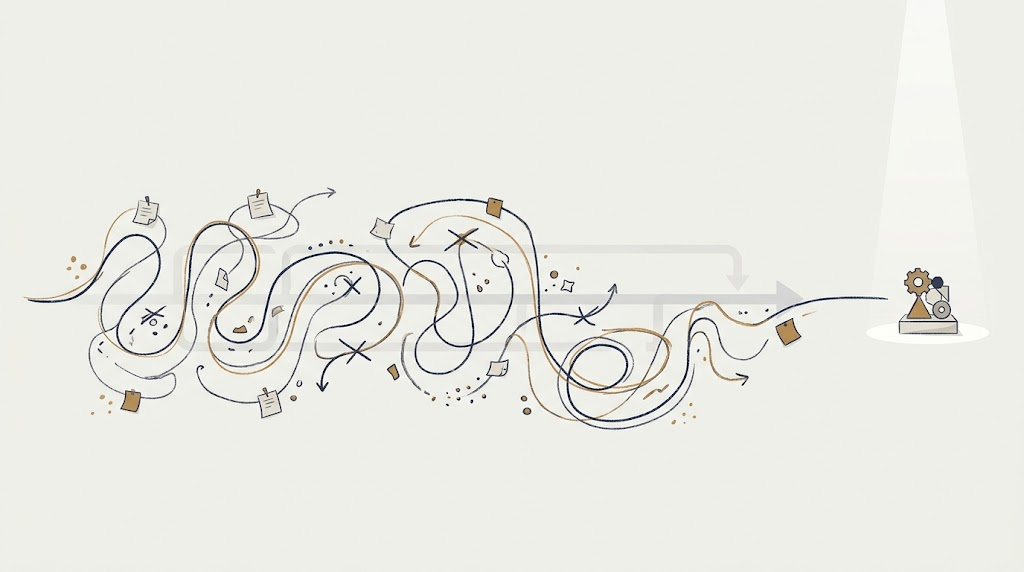
I’ll bring all of that together and use tools to let me have longer‑form conversations with the material. Not to get the answer, but to see what patterns show up when everything is in one place.
And then I will lock down my final review—and start asking forward‑looking questions about 2026.
Letting AI Suggest, Then Choosing Deliberately
As part of the values analysis, AI suggested a handful of experiments for next year—things I might try in Q1, Q2, or later.
Some were easy to discard. They assumed gaps that aren’t actually gaps for me.
Others, though, were surprisingly thoughtful. Not instructions—just possibilities. I’ll keep a few of those on the table and see which ones resonate as I shape next year.
Time Tracking: What I Measure—and What I Don’t
This reflection also brought me back to how I track time.
I don’t track everything. I never have.
I track deliberately when I’m trying to learn something specific. Reading time, for example. Or, over the last year, time spent creating—not just consuming.
I’ve thought about tracking shipping next. But that requires definition first. What counts as shipping? Writing? Publishing? Editing? Promotion?
And that last one—promotion—is the uncomfortable truth I can’t ignore. I shipped two books in 2025. I didn’t promote them nearly enough.
If I start tracking promotion, it won’t be for optimization. It’ll be to understand what experiments I’m actually running—and which ones I’m avoiding.
Reflection Without a Stopwatch
Interestingly, I don’t track the time I spend reflecting.
Journaling. Pondering. Making connections. Sitting with ideas until they click.
Partly because I know it’s happening. Partly because when I’m in it, I lose track of time entirely. It’s flow.
If anything, the risk isn’t that I’m doing too little reflection—it’s that I could do a lot of reflection and not enough action. But I know that’s not the case.
Tracking here isn’t about proving value. It’s about balance (Not something we find, but something we create).
What’s Still Left Before I Close the Year
Before I wrap up the 2025 review, there are a few things left:
- Revisiting my favorite quotes from the year and recording what they bring up now
- Reviewing the books I read and refining which ones truly earned a “favorite.”
- Noting music that mattered this year—new or old—and why it stuck
Those details help anchor the year emotionally, not just intellectually.
From there, I’ll sketch what 2026 might look like, lock in Q1 goals, and move forward with a little more clarity—and a lot more curiosity.
A Quiet Takeaway
AI didn’t do my annual review for me.
It listened. It reflected things back. It pointed at patterns I could choose to engage with—or not.
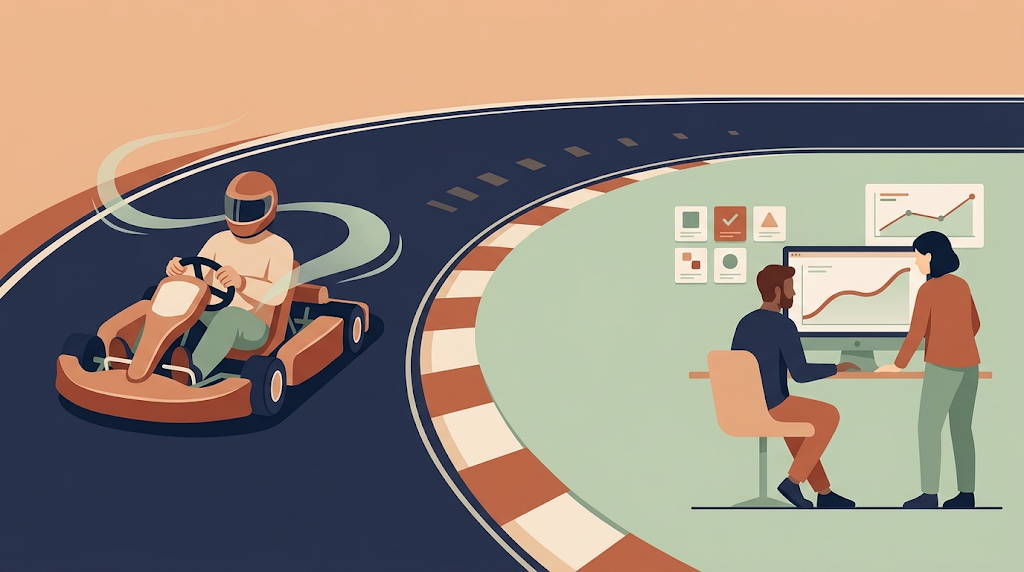
In the end, it amplified the part that matters most: paying attention to my own thinking, and giving myself better questions to carry into 2026.



Leave a Reply