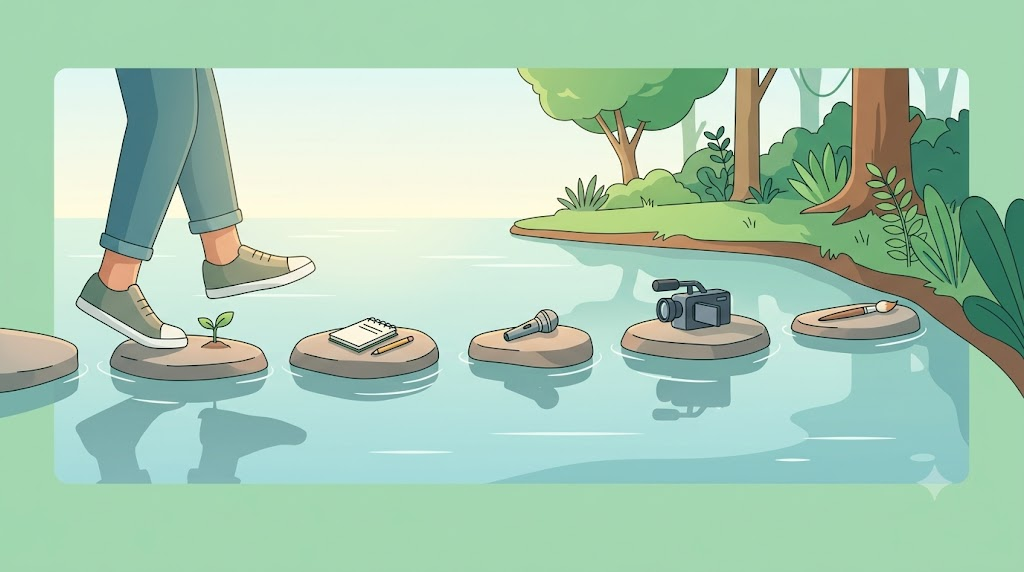
A few weeks before preparing a talk on goal setting, a nine-minute interview popped up in my feed. The author was Anne-Laure Le Cunff, and she was talking about her book, Tiny Experiments. I watched it once, then again, then ordered the book. It was describing almost exactly how I had been approaching goals for years, except now it had a name.
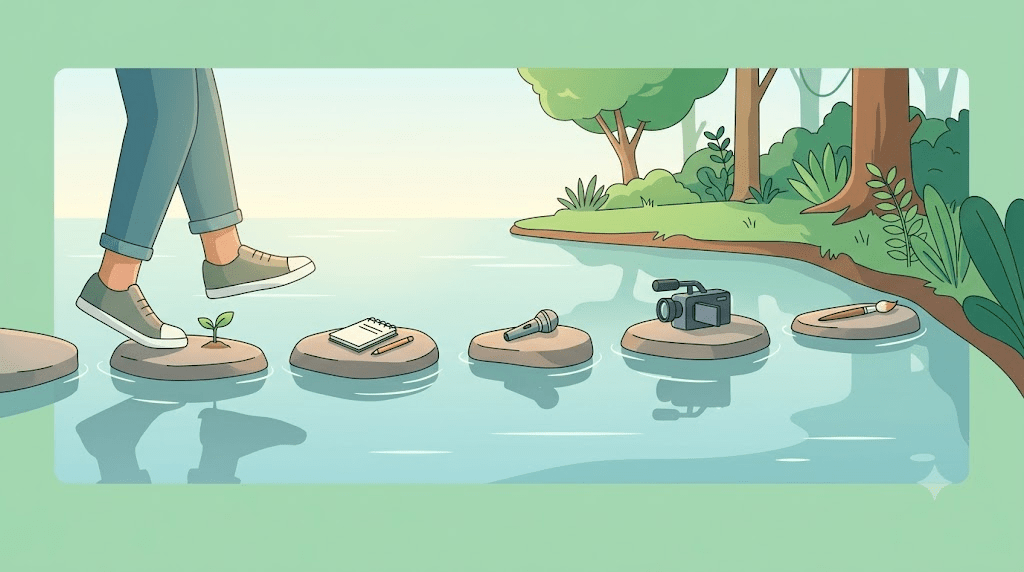
The core idea is simple. Instead of making a massive plan and waiting for the perfect moment, you run a small experiment. The format is almost embarrassingly simple: I will [do this] for [this time]. I will write one hundred words a day for a week. I will do Duolingo for three months. I will try Final Cut Pro for a quarter.
That is it. No vision statement. No five-year roadmap. Just a bounded experiment.
Stop Planning, Start Exploring
Most of us overplan because planning feels like progress. We research, we compare tools, we make spreadsheets. Then we look up and realize we have not actually done anything. Planning has become procrastination with a clean user interface.
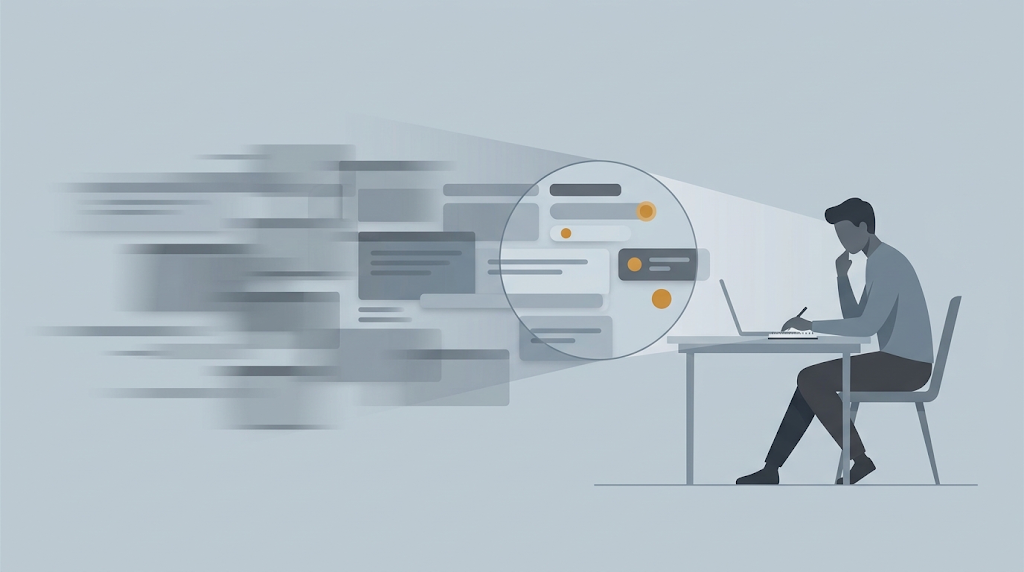
Tiny experiments flip that. You do a small amount of planning, enough to know why you are entering the jungle, and then you go. You explore. You get curious. You see something shiny and wander toward it. You leave breadcrumbs so you can find your way back. You adapt.

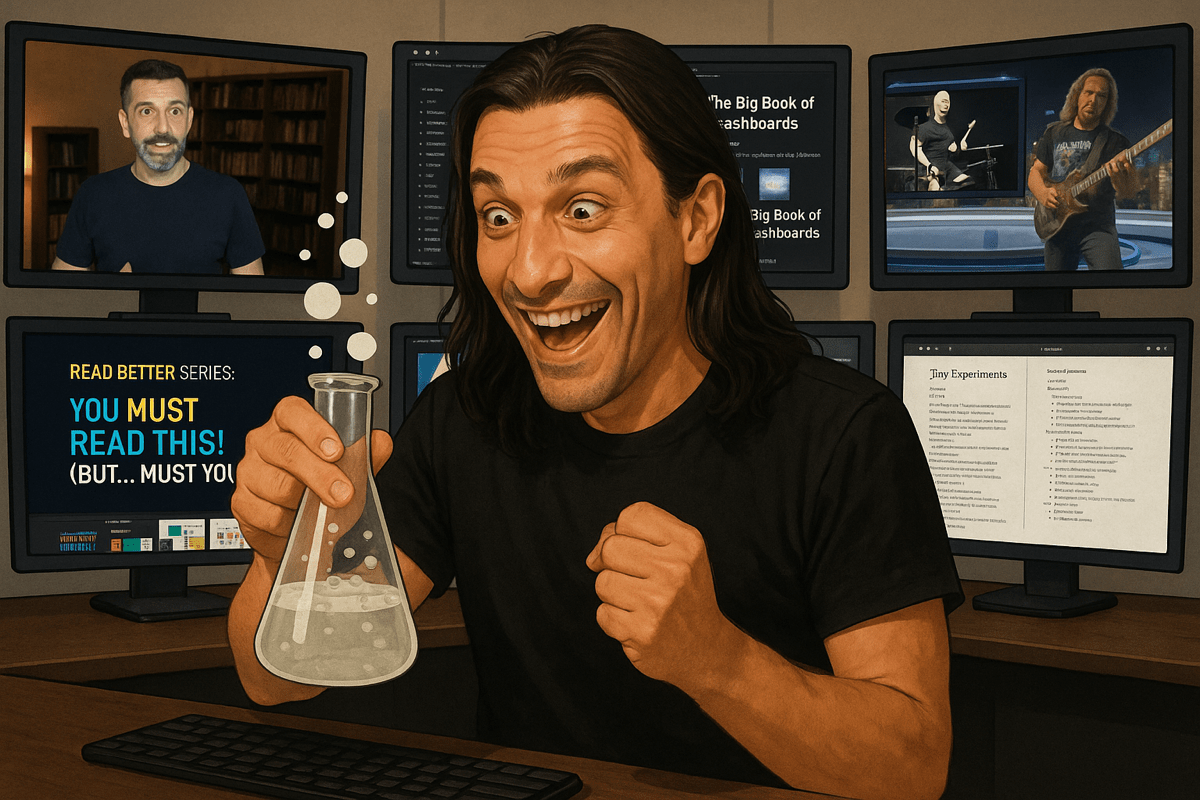
This is how I learned Final Cut Pro. My old PC could not handle video anymore, so I procrastinated for months. Then I made it an experiment. In Q3 of 2024, I would spend the quarter watching a training course and doing minor edits on homemade videos. That was it. I did not commit to becoming a filmmaker. I just committed to trying the tool, applied to a need I had.
Then a client needed a video for a trade show. Because I had been experimenting, I worked on it. That led to another experiment: YouTube videos. Then music videos. Then using AI to automate parts of the production. Each one was tiny. Each one built on the last. None of them started with a big plan.
Start Messy
I do not wait for the perfect setup. I do not buy the expensive camera first. I do not redesign my entire life around a new habit. I start with what I have and accept that the first version will be messy.
When I started adding audio to my blog posts, I did not build a studio. I read the post into a microphone and dropped the audio file into Final Cut Pro. The transcription showed me words I pronounced differently than I thought. I learned I say some words in my head one way and out loud another way. That was useful. I would never have learned it by planning.
Perfection is a point in time. What is perfect today will not be perfect tomorrow. So waiting for perfect is waiting for something that does not exist. Start messy, then refine through action.
Replace Certainty With Curiosity
The question that kills most goals is “Will I succeed?” It is the wrong question. You cannot know. If you could, it would not be a goal. It would be a task.
The better question is “What might this teach me?” That turns the whole thing into an experiment. You are not proving you can do something. You are discovering whether you want to keep doing it.
My experiment with blogging audio turned into a lesson about articulation. My experiment with images turned into a lesson about visual thinking. My experiment with AI automation turned into a workflow that saves me real time. None of those were guaranteed. Each one was a discovery.
Find the Edge of Your Knowledge
One idea I keep coming back to is the edge of your knowledge. You are standing inside a circle of what you know. Everything outside is what you do not know. As you learn, the circle grows, and so does the perimeter of what you do not know. The more you learn, the more aware you become of how much is still out there.
That can feel discouraging. It can make you feel dumber even as you get smarter. But it is actually a good sign. It means you are moving. Tiny experiments push that edge outward a little bit at a time.
The Right Size
A tiny experiment is not a commitment to a new identity. It is a commitment to a small action for a short time. If it does not work, you stop and document why. If it does, you extend it. If it partially works, you adjust.
This is how I ended up blogging for a while with audio and images and AI-generated graphics. Each piece came from a separate experiment. None of them were in the original plan because there was no original plan. There was just one experiment after another.
If you have been thinking about trying something, stop thinking. Pick the smallest version. Decide how long you will try it. Then do it. At the end, ask what you learned. That is the whole method.


Leave a Reply