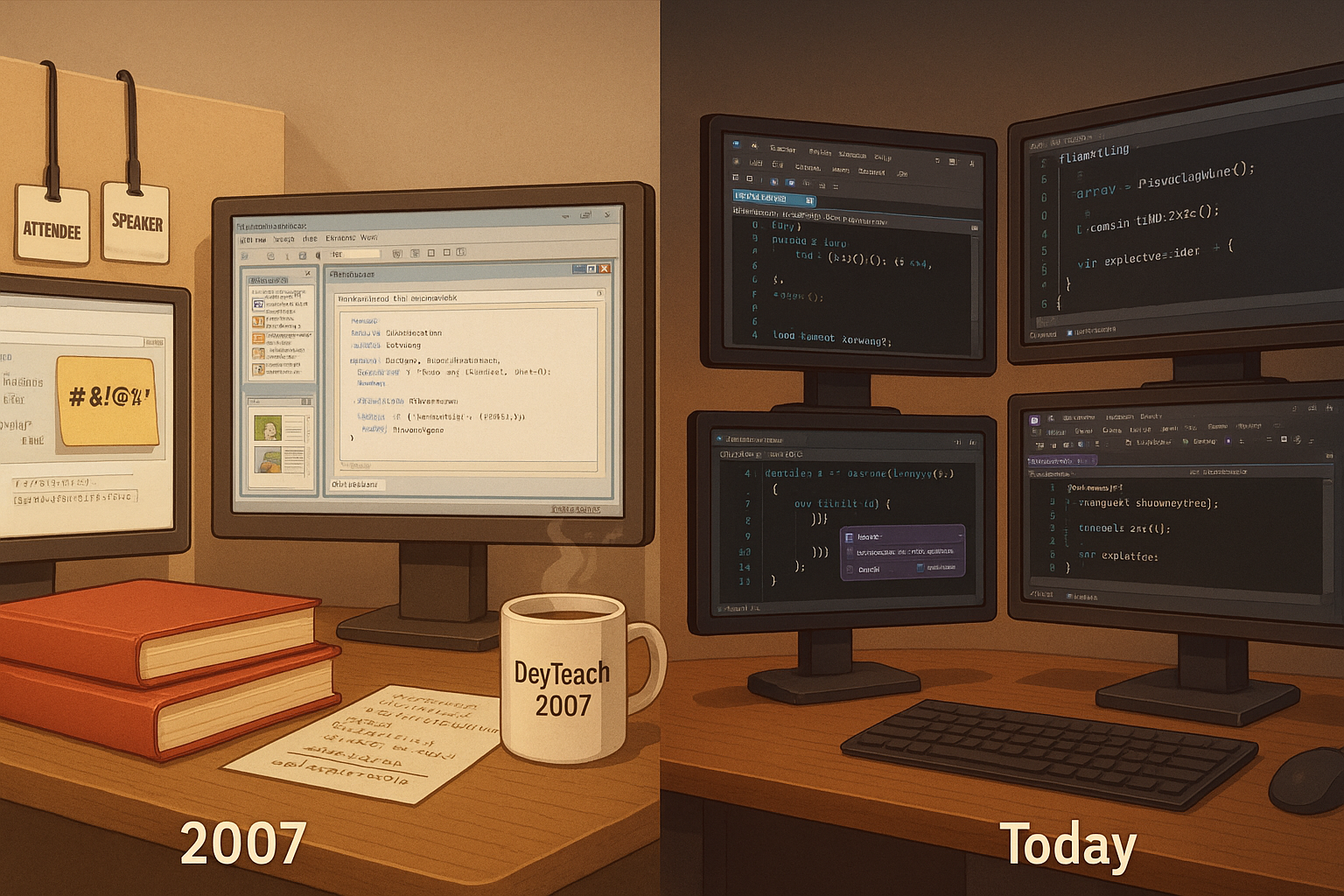
As I continue revisiting my 20 years of blogging, I’ve now arrived at 2007. Going through old posts feels like flipping through an old photo album—every entry brings back vivid memories of tools, ideas, and moments that shaped my work and habits.
🎥 Watch the video: I recorded my live reflections on these early posts — unscripted, personal, and full of memories.
Using TimeSnapper to Stay on Track
Back in 2007, I was using a tool called TimeSnapper. It took screenshots every few seconds, helping people reconstruct their workday and fill out timesheets. I used it differently. Whenever I got interrupted, I could replay the last few minutes of screen activity to remember precisely where I left off. That helped me jump right back into focus after an interruption.
I haven’t used it in years. These days, I rely more on note-taking and structured planning. Maybe that’s why I no longer need a tool like that—my way of managing interruptions has evolved.
Learning Through Certification (Not for the Certificate)
2007 was also the year of the Visual Studio 2005 certifications for .NET 2.0. A few coworkers and I formed a study group, meeting weekly to go through chapters together. I was never into certifications for the title or piece of paper. What I valued was the learning and how it helped us connect with each other’s strengths. I could tell who was good at what, and who might need help with specific topics—that made our daily work stronger.
I also noticed my strong visual memory around that time. I could recall exactly which book, which page, and where on the page I saw a concept. That realization later connected to how I think and learn best—as a visual thinker.
Tools, Talks, and Transitions
By 2007, I was traveling and speaking often—Tulsa Code Camp, Microsoft MVP Summit, DevTeach Montreal, and more. I was flying a lot, sharing what I was learning, and writing about the tools I relied on.
- Windows Live Writer was one of my favorite blogging tools. It made writing and publishing posts easy and visual—something I missed dearly when I moved to Mac in 2011.
- Sysinternals tools like ZoomIt and Process Explorer were must-haves for Windows users and presenters. ZoomIt, in particular, became part of my talk routine—and I still use it today.
Saying Goodbye to Visual FoxPro
2007 was also when Microsoft officially announced there would be no new version of Visual FoxPro. That was a sad moment for many of us. I started my journey with dBase III+, Clipper, and eventually FoxPro. For me, FoxPro was the bridge from procedural code to more structured, event-driven programming. I even mentioned in that post how the acronym “ADO” still meant ActiveX Data Objects in my head—long before Azure DevOps took over that same abbreviation.
Falling in Love with LINQ
Around that time, I discovered LINQ (Language-Integrated Query). It blew my mind. What fascinated me wasn’t just querying databases—it was realizing I could query anything enumerable. Arrays, collections, controls—suddenly, code that used to be clunky loops became elegant queries.
At the time, I was using query syntax (from x in y select z), but eventually I switched to method chaining, the more fluent, modern style. Looking back, that shift mirrors how my own thinking evolved: from procedural patterns to more expressive, composable ones.
Productivity and Presentation Habits
A few of my 2007 posts remind me how deeply I’ve always cared about tool mastery and workflow efficiency:
- I wrote about customizing tool settings—comparing it to adjusting mirrors and seats in a new car before driving.
- I shared tips on using launcher tools like SlickRun on Windows (years before I switched to Alfred on Mac).
- I discovered not everybody knew you could hit Ctrl+C on a Windows message box to copy its text—a simple but powerful trick that blew people’s minds during my talks.
Organizing Windows and Monitors
By 2007, I’d already been using multiple monitors for years. I blogged about how I arranged my screens—putting the main code view front and center, keeping secondary tool windows out of the way, and switching between layouts depending on whether I was presenting or developing.
Even now, that mindset continues. The tools changed—Visual Studio to Rider, Cursor, or Windsurf—but the principle remains: design your workspace for focus, flow, and clarity.
Remembering the Dallas Code Camp
One of my fondest memories was driving four hours to the Dallas Code Camp to give two talks in the morning. Attendees later voted on which sessions they wanted repeated in the afternoon—and both of mine were the top choices. So, I did both again. It’s still one of those experiences that reminds me why I love teaching and sharing.
Looking Back on 2007
As I closed out April 2007, I realized how much my blogging and teaching were intertwined with how I worked and learned. From time-tracking to focus tools, from code to conferences, it was a year of experimentation and realization. I was figuring out how I thought, how I taught, and how I wanted to keep improving.
This journey through January and April of 2007 took me 42 minutes to revisit. Four months down, many more to go—but every post reconnects me with the path that got me here.



Leave a Reply