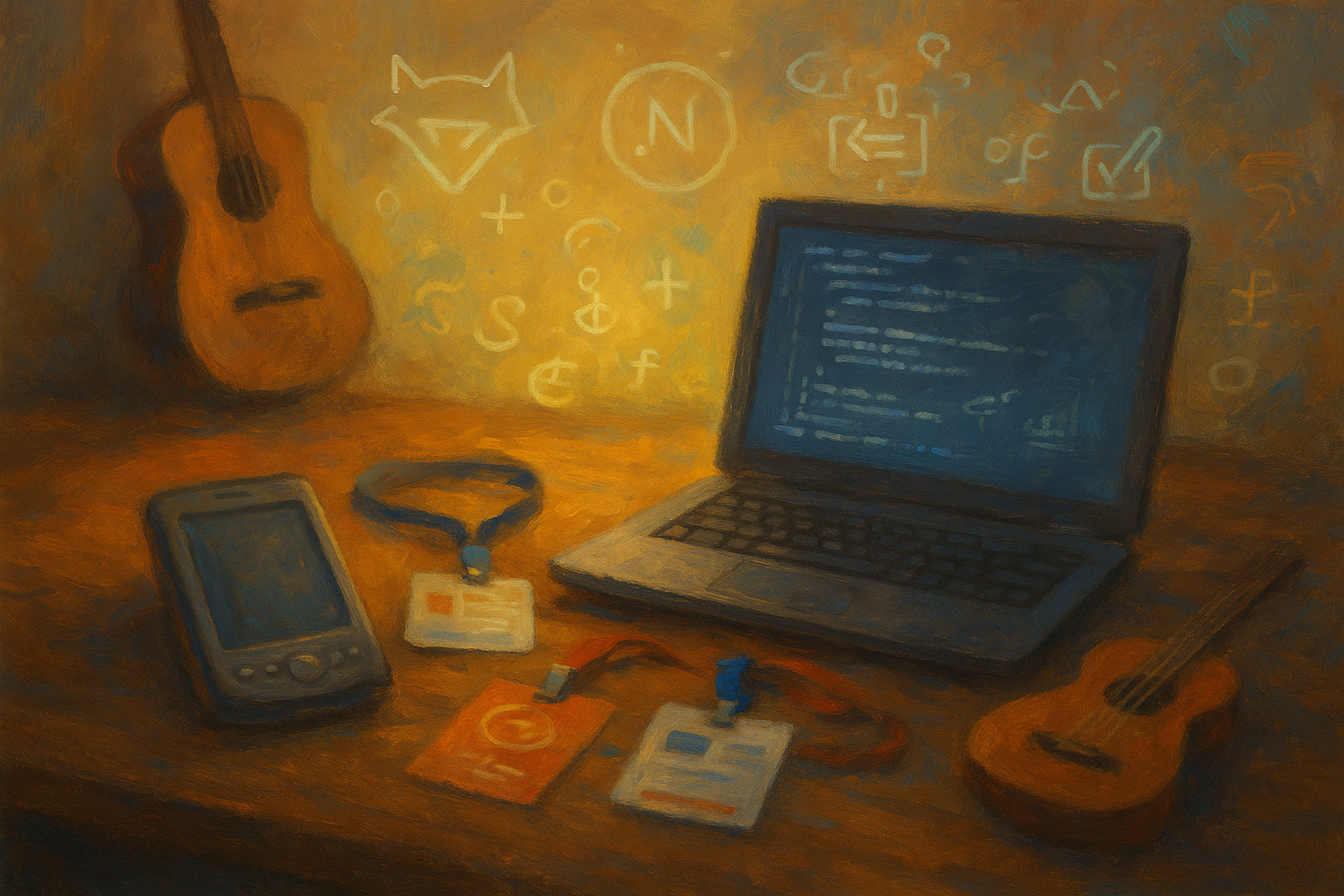
Revisiting May–September 2007
Over the last few weeks, I’ve been revisiting old posts from my blog’s early years and recording videos reflecting on what I find in them. It has been a fascinating way to reconnect with past versions of myself—what I was learning, what I was struggling with, and what I was excited about.
This chapter of the journey covers May through September of 2007, and it turned out to be a surprisingly rich period. A lot was happening for me at the time: speaking at conferences, learning new tools, experimenting with productivity, and simply trying to keep up with the pace of technological change.
Speaking at Advisor DevCon and Other Events
Back then, Advisor DevCon was the conference for Visual FoxPro developers. For years, I had only read about it from afar in Brazil, thinking it was way out of reach. So getting invited—not only to attend, but to speak—was a milestone. I had been writing a lot of articles to help FoxPro developers ease into .NET, and those contributions opened doors for me.
Around the same time, I was also speaking at regional events like the Dallas Code Camp, Houston TechFest, and user groups. Many of my most popular sessions were on fundamentals: object-oriented programming in .NET, design patterns, and productivity tips. It’s interesting how topics we sometimes think are “basic” are often the ones people need most.
How I Kept Up with Technology
This period captures how I tried to keep up with the fast-moving .NET world—something that still feels just as relevant today (but now, with AI tools).
My primary sources at the time:
- Podcasts – DotNetRocks and Hanselminutes were staples.
- Blogs – I consumed a ton of blog content, often loading posts onto my Pocket PC so I could read them anywhere.
- Webcasts – The predecessor to today’s YouTube tutorials.
- Study groups – Not for certification, but to learn from my coworkers and become aware of pieces of .NET I wasn’t using yet.
- Brown bag meetings – Quick, informal demos with coworkers. These eventually evolved into the Virtual Brown Bag years later.
Even then, I wasn’t trying to follow everything. I was looking for what helped me solve real problems in the moment. That hasn’t changed.
Tools and Experiments
2007 was full of experimentation with tools and techniques.
Some highlights:
- FxCop taught me a ton about .NET by analyzing my code and pointing to parts of the documentation I had never read.
- MSBuild, Team System, and build automation were becoming part of my workflow.
- ReSharper and CodeRush were both part of my setup because each had strengths that the other didn’t.
- Static analysis rules, custom tooling, and diving into IL (intermediate language) were things I was investing in.
- Smell# – a silly idea I blogged about, imagining a 4D experience where code would “emit” a smell based on its quality. But behind the joke was a real tool—RefactorPro—showing cyclomatic complexity in Visual Studio.
Productivity and Shortcuts
Even in 2007, I was talking about productivity. The details have changed over the years, but the principles haven’t.
Learning keyboard shortcuts—OS, IDE, and cross-application—was something I preached often. It still surprises me how many developers use an IDE daily yet don’t learn the shortcuts for the actions they perform most often. One shortcut a day can add up to substantial time savings.
Life on the Road
That year, I was also traveling a lot for conferences, user groups, and client work. I used that time to:
- listen to podcasts,
- practice guitar with a travel-friendly instrument,
- watch movies on my Pocket PC,
- and tinker with code until my laptop battery died.
It was a different era of technology, but the routine feels familiar—finding small spaces to learn, create, or unwind.
Wrapping Up
Looking back at this slice of 2007 reminded me how much I was experimenting, learning, and sharing. Some tools are gone, some practices have evolved, but the themes remain the same. The curiosity, the continual learning, and the desire to share what I learn with others—that’s the thread that connects everything.
There’s more to revisit, so I’ll continue the journey in the next installment.


Leave a Reply