The Blank Page Podcast is now Reflective Practice Radio. The name change happened for practical reasons, but it also surfaced something we had already been circling for weeks: this show has never been about performance or polished answers. It’s about slowing down inside fast-moving work, thinking out loud, and learning while we’re in motion.
This episode grew out of a simple observation: technology isn’t just moving fast—it’s accelerating in ways that change how we experience our work. The tools aren’t the problem. The question is how we adapt our perception and practices so we don’t lose clarity as everything else accelerates.
Speed Is a Perception Problem
We kept coming back to an analogy that has stuck with me for years: motorsports.
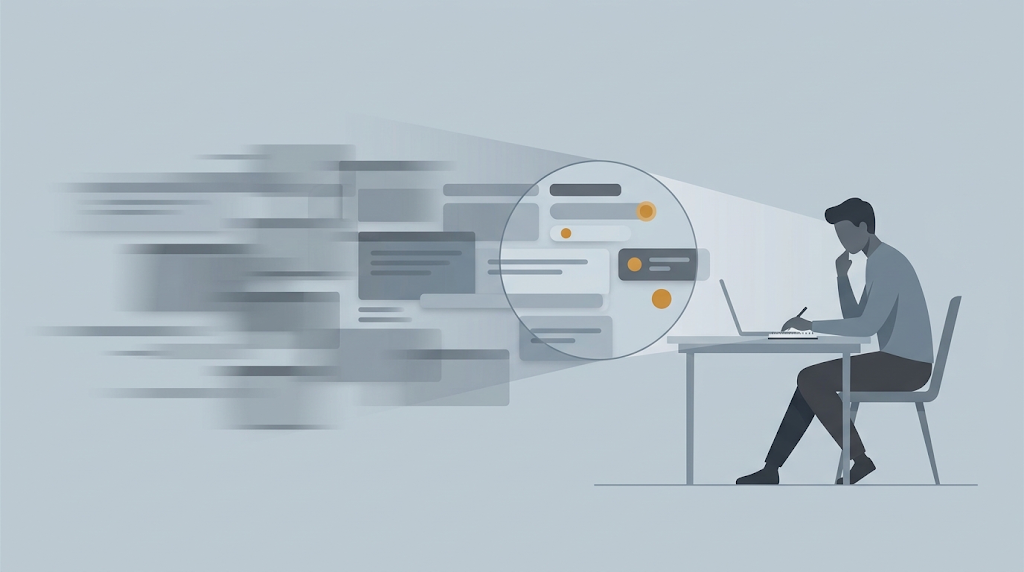
If you’re standing trackside at a Formula One race, the cars are a blur. Noise, vibration, speed—everything feels overwhelming. But if you watch the same race from above, nothing about the cars has changed. They’re still moving at extraordinary speed. What’s changed is your position relative to the action.
That distinction matters.
When work feels chaotic, our instinct is often to slow everything down: fewer tools, fewer initiatives, fewer experiments. Sometimes that’s the right call. But often, what we really need is to change where we’re looking from. Lift our gaze. Create distance. Introduce practices that help us recognize patterns rather than reacting to every moment.
The work isn’t slower. We’re just better oriented.
AI Compresses Work, Not Understanding
We spent a good chunk of the conversation unpacking something that often gets missed in AI discussions: speed is only visible at the surface.
Yes, AI can generate code, summarize meetings, and prototype features in minutes. But those moments of apparent magic sit atop something deeper—years of experience, context gathered in conversations, decisions made in meetings, and judgment built over time.
What AI really does well is compression.
In my own work, recording meetings, capturing transcripts, and letting AI analyze that material means I don’t have to choose between paying attention and taking notes. I can stay present in the conversation, then later extract exactly what I need: decisions, risks, open questions, and next steps.
The work looks faster. The understanding is still human.
Better Meetings, Fewer Meetings
One of the recurring themes in this episode was reframing how we think about meetings.
If a meeting exists only in the moment—if nothing is captured, shared, or revisited—it feels like a tax on time. But when conversations are treated as raw material for insight, they become assets.
Recording meetings, summarizing them, and turning them into actionable artifacts changes the dynamic entirely. Suddenly, the value of the meeting extends beyond the people in the room. It also changes behavior: people show up differently when they know the conversation will be used, not forgotten.
Better meetings naturally lead to fewer meetings. Not because we mandate them away, but because the ones we keep actually move the work forward.
Story Before Features
We also talked about something deceptively simple: how work is presented.
Too often, demos and reviews devolve into lists of completed tasks or UI changes. Buttons clicked. Screens shown. Checkboxes marked.
But the people on the receiving end—stakeholders, customers, decision-makers—don’t experience the system that way. They experience a situation, need, or problem that unfolds over time.
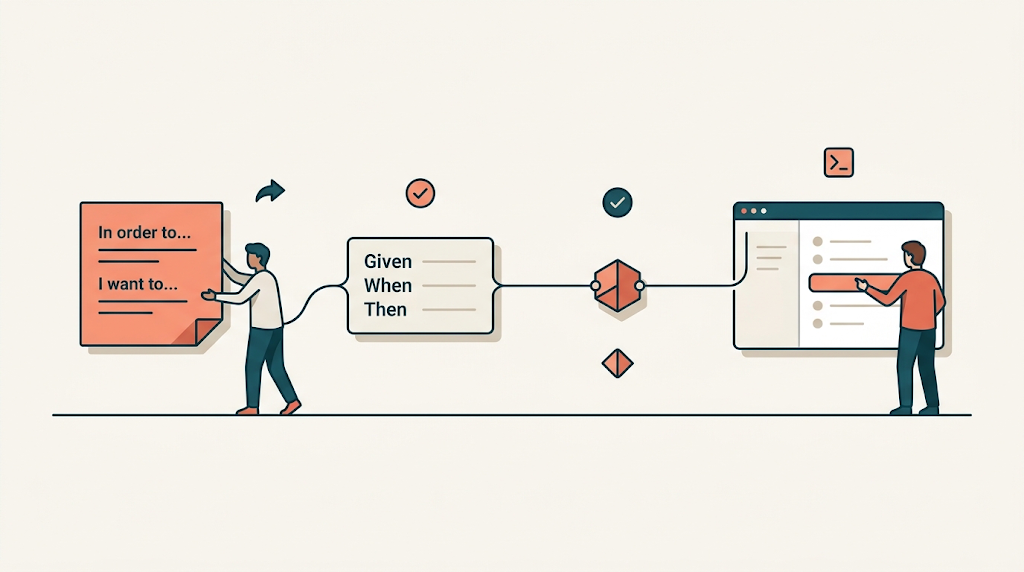
When we start with the story—what was happening before, what changed, and why it matters—the feature finally makes sense. Even deeply technical work can be framed in human terms when we anchor it in outcomes instead of implementation.
Different Minds, Better Outcomes
Toward the end of the episode, we leaned into how differently people think.
Some of us think in words. Others in images. Some linearly, others spatially. None of these are better or worse, but friction emerges when we assume everyone processes information the same way.
What’s interesting is how modern tools can help bridge that gap. A verbal explanation can be turned into a visual diagram. A narrative can accompany a visual walkthrough. Instead of forcing people to change how they think, we can translate between modes.
That’s where collaboration becomes additive rather than exhausting.
Reflection as a Competitive Advantage
This episode wasn’t about slowing down technology. It was about learning how to move with it—without losing ourselves in the process.
Reflective practice creates space for better questions, better decisions, and better outcomes. It helps us recognize when to accelerate and when to lift our heads and reorient.
That’s what Reflective Practice Radio is here for.
If any of this resonates, I encourage you to watch or listen to the full episode. The conversation itself is the point—and, as always, it’s one we’re still learning from.

Leave a Reply