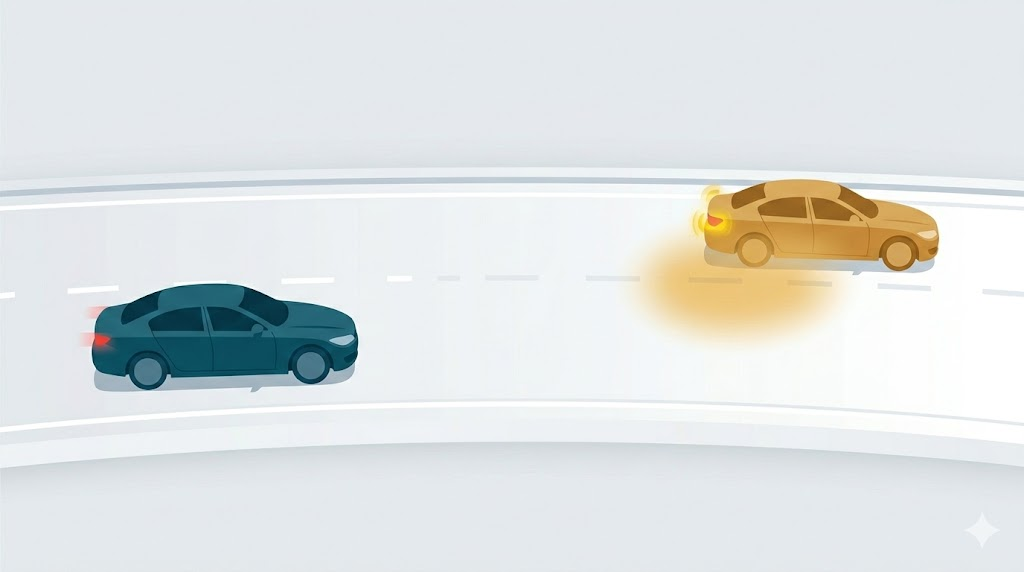
A few years ago, at the Circuit of the Americas in Austin, I was riding my motorcycle around the track, convinced I was leaning the bike like my MotoGP heroes. It felt like I was pushing the limits. The candy stripes along the edge of the track seemed so close in my peripheral vision. My onboard camera footage confirmed what I felt — I was really getting after it.
Then my instructor showed me his onboard footage, the one capturing me from behind. And there it was: I had so much more room to lean. What I thought was the edge wasn’t even close.
I couldn’t see my own blind spot. But he could.
Someone Else Can See What You Can’t
That moment on the track has stayed with me because it keeps showing up in other parts of my life — especially in how I work with teams.
In a recent conversation, we discussed helping people work through situations that put them outside their comfort zone. Do we push them into those situations? Do we ease them in? How do we help them practice?
The answer I ponder: trust first. Before asking someone to stretch, we need to earn their trust. They need to believe that yes, it will be uncomfortable, but someone is watching out for them. Someone can see what they can’t.
Easing People In
I encourage team members to rotate leading sprint reviews. Not just presenting a demo — actually leading the meeting. Talking about the problems we solved. Learning to speak to stakeholders so the product owner can step back into a support role rather than carry the whole conversation.
That’s a stretch for a lot of people. So I don’t throw anyone into it cold.
With one colleague, for example, we co-presented. She built the slide deck in the order that made sense to her, refined the slides as she had them in her mind, and took ownership of the content. I was there for support. When she hit a point that felt too uncomfortable, she deferred to me for a moment, then jumped right back in. She did great.
I’ve done the same with several other team members over time. One of them then turned around and did the same with a newer colleague, who appreciated it. That’s the ripple effect of building trust — it multiplies.
The Blind Spots Analogy
When I think about why trust matters so much in these situations, I go back to blind spots.
On the road, every driver has blind spots. The system works when other drivers are looking out for each other — yielding, protecting, making space. It breaks down when drivers see someone else’s blind spot and don’t care.
In a team, it’s the same. New team member? Be patient. Be helpful. Everyone has blind spots. Sometimes others can name them. Sometimes they can cover for them. And sometimes — like on the racetrack — the person needs to see the evidence with their own eyes before they can trust the feedback.
Years later, at the same Circuit of the Americas, a pro racer followed me so closely he could see my footwork, my hand on the brakes, the exact moment I was braking and releasing. He noticed things no other instructor had ever pointed out. Because he was that close, paying that much attention.
In a team, the equivalent is paying real attention to someone. Watching how they communicate, where they hesitate, and what they skip over. And then showing them — not just telling them.
Practical Ways to Help
So what does this look like in practice?
For public speaking, one blind spot I often see is pacing — rushing through material or going too slow. The person usually can’t feel it in the moment. Here’s what I suggest:
-
Map out the talk against the timebox. Know which slide you should be on at the halfway mark. If you’re on slide 3 when you should be on slide 10, you need to adjust.
-
Build in checkpoints. A slide with a question for the audience can serve double duty: it engages the room and gives you a moment to recalibrate your pace.
-
Prepare for silence. If you ask the audience a question and nobody answers, what’s your follow-up? Have examples ready that might spark participation.
These aren’t just presentation tips — they’re ways to make blind spots visible so the speaker can self-correct over time.
Creating Safe Environments
One thing I believe strongly: people practice better in safe environments.
If someone struggles to explain technical concepts to non-technical stakeholders, we can build a space for that. Bring in a few members of the executive leadership team. Have the person present the business value of what they built. Let the executives ask the kinds of questions a real stakeholder would ask. Practice the language, the framing, the confidence.
If it’s a technical talk and the speaker is anxious about tough questions, invite a supportive audience. Tell them: this person wants to practice. Be helpful. Read their body language. Ask a few questions — but be kind about it.
This is something we offer at Improving: a safe, supportive environment for everyone to hone these skills.
Trusting Others With Our Own Blind Spots
This isn’t just about helping others. I’ve been on the receiving end too.
At key moments in my career, people recommended me for roles I didn’t think I was qualified for. They could see something I couldn’t. I trusted them — not because I suddenly believed in myself, but because I believed in them. And they were right.
That’s the thing about blind spots. We can’t see them by definition. We need people around us who we trust enough to say, “You can lean further. You’ll be fine.” And sometimes we need them to show us the footage.
What It Comes Down To
Helping someone through discomfort isn’t about pushing harder. It’s about building enough trust that they let you see their blind spots — and enough evidence that they start to see them too.
So I keep asking myself two questions: How do I build trust with others so I can help them work on their blind spots? And who do I trust enough to help me with mine?


Leave a Reply