
Product owners are often described as “the bridge between developers and the business.” It sounds right. It sounds healthy. But I keep wondering — are they really acting as a bridge? And is that bridge even open for crossing, or is it more of a checkpoint?
“Don’t Worry, I’ll Shield You”
I still remember my very first meeting with a product owner. He told me he was going to shield us from the stakeholders so we could just focus on our work. Our only job, he said, was to make him happy.
I told him I appreciated the protective intent, but I disagreed. My job wasn’t to make him happy. My job was to make his clients happy. If we successfully solved their problems, he’d naturally be happy too.
That moment stuck with me because it captures something I keep running into. Whenever I hear a product owner say, “Don’t worry, I’ll shield you from the business so you can focus on writing code,” my reaction is the same: please don’t.
The intention is usually good. But treating the role as a shield builds a hard wall between the business vision and the technical execution. It confines developers to their rooms, where they speak only technical jargon — JavaScript, Java, C# — and keeps them from learning the language of the business.
The Gatekeeper Pattern
I’ve seen this play out many times. UX designers, business analysts, and stakeholders say they’d rather not have developers in the room when they’re discussing the product vision, the plans, the business direction. And honestly? I understand why. Developers can get stuck on the technical side without making much effort to understand why those things matter. The conversation drifts from “what problem are we solving for people” to “what framework should we use” before anyone notices.
So those developers stop getting invited. Not out of malice — out of self-preservation. The business side needs space to think about the problem without someone jumping to the solution.
From that angle, the product owner becomes a gatekeeper — keeping developers from leaking technical concerns into conversations that aren’t ready for them yet.
It goes the other way, too. Sometimes the business starts imposing solutions on the developers instead of describing needs. “Build this screen with these fields in this order.” At that point, developers aren’t really developing solutions. They’re just implementing what they’re told. The product owner steps in again, this time shielding the developers from being reduced to order-takers.
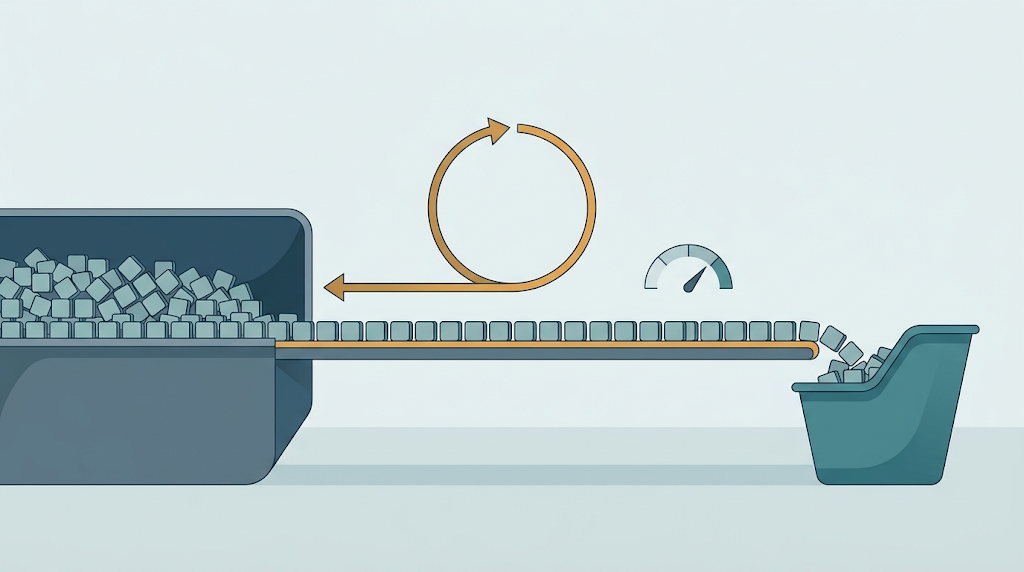
In both directions, the product owner controls access rather than enables connections.

A Gradient, Not a Wall
Instead of picturing a solid wall with the product owner as the only opening, I think the relationship between the business and the team should look more like a gradient. Not a hard boundary, but a space where the two worlds blend into each other.
That means bringing stakeholders, executives, and business owners closer to the whole team — not just the coders, but QA, UX, everyone. It means establishing common ground where people from both sides can meet without a translator.
A bridge connects two sides. People cross it freely, in both directions. They visit, they observe, they come back with a new understanding.
If a product owner is truly acting as a bridge, then developers should be crossing over into the world they’re building solutions for. Are they visiting the warehouse? The stores? The offices where people will use what they’re building? Are they sitting with the people whose problems they’re solving, watching how they work, listening to how they describe their frustrations?
And on the other side, are the stakeholders ever invited into the development room? Do they get to experience the conversations, the trade-offs, the tooling, the process? Do they see what it actually takes to turn an idea into working software?
If the answer to most of those questions is “no,” then the product owner isn’t a bridge. They’re a translator at best, a bottleneck at worst.

The Difference Is in the Crossing
Here’s what I think matters most: a bridge that only one person crosses isn’t really a bridge. It’s a messenger route.
A product owner who acts as a true bridge encourages people from both sides to cross over. They create opportunities for developers to see the business firsthand. They invite stakeholders to witness how software gets shaped. Instead of being the sole person painting a picture and describing the vision to both sides, they let people see things for themselves through their own perspectives.
That changes the dynamics. When a developer has stood in the warehouse and watched someone struggle with the current process, they don’t need a user story to feel the urgency. When a stakeholder has sat in a sprint review and watched a team navigate competing constraints, they stop assuming that “just add a button” is a simple request.
The Freedom to Cross
There’s one more thing worth calling out. If developers can’t freely and independently cross that bridge to gain insight — if every interaction with the business has to be mediated, scheduled, and filtered through the product owner — then the bridge metaphor breaks down entirely.
A real bridge doesn’t require permission to cross. It’s just there, connecting two places that used to feel far apart.
The best product owners I’ve worked with don’t position themselves as the only connection between two worlds. They work to narrow the gap. They build trust on both sides so that eventually, people cross on their own. Different perspectives meet. The conversation gets richer. And the solutions that come out of it are far better than anything one person could have described from the middle.
When that happens, developers stop being isolated order-takers and start acting as strategic allies to the business — people who truly understand why a feature matters, not just how to build it.
That’s not just a bridge. That’s how you maximize the value a team can deliver.



Leave a Reply