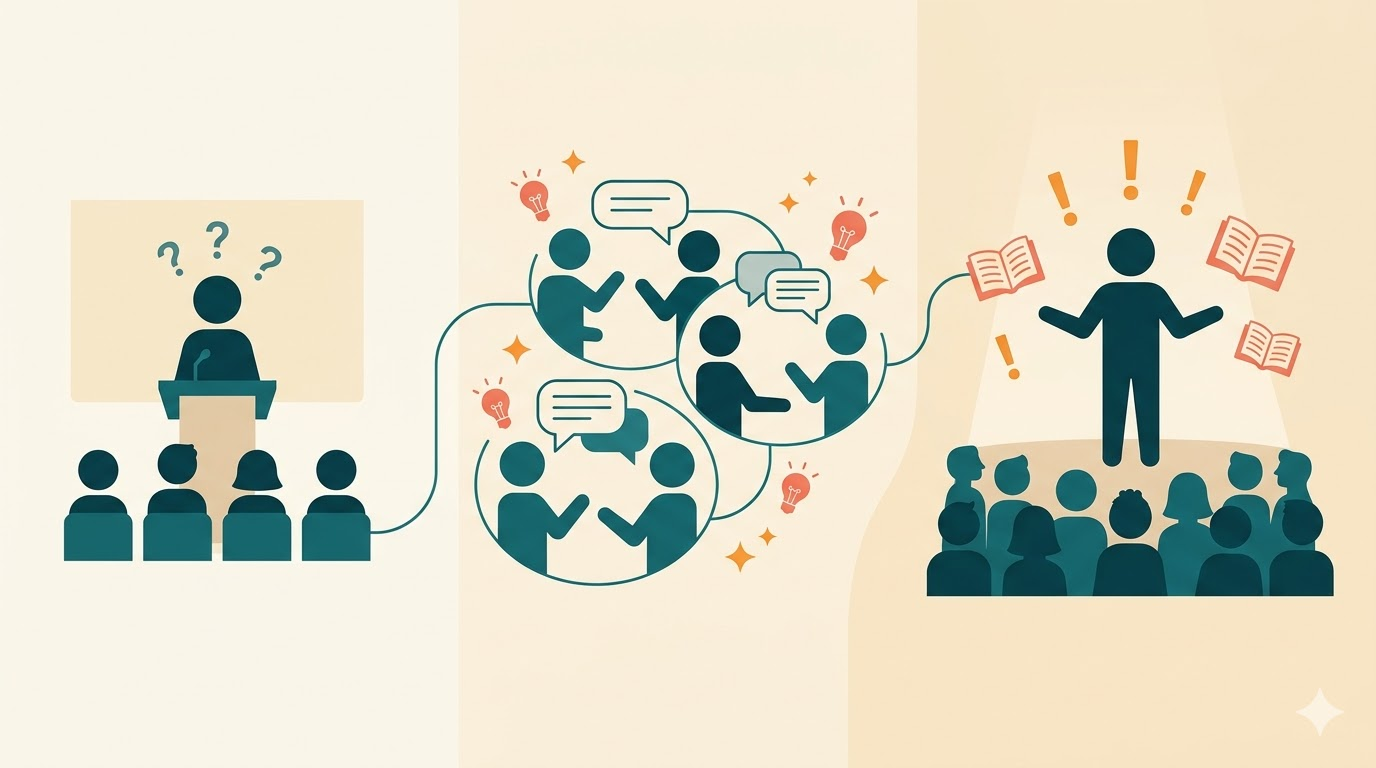
I recently had the opportunity to participate in Improving’s Women Speakers Program, where I was asked to share my journey and experiences with public speaking. The conversation covered everything from my very first talk to what makes a technical presentation memorable. Here are the questions I was asked and my responses.
What was the topic of your very first talk, and how did you come up with it?
My first talk was in the late 90s on “What’s New in Visual FoxPro 7” for Microsoft in Brazil. I became known in the Brazilian FoxPro community by translating questions from Portuguese forums to English, getting answers from worldwide forums, learning from them, and translating responses back. When Microsoft needed someone to present their FoxPro 7 launch event, a community member recommended me. Microsoft gave me an early copy about a month before the event. I documented my learning process, created videos, and turned it into a full-day, eight-hour presentation, despite having worked with FoxPro for only two or three years and having never seen version 7 before.
Many people feel they are not expert enough to give a talk. How do you decide when you know enough to speak on a topic?
I don’t measure expertise and don’t have time for it. I focus on solving problems. Once I’ve solved a problem, mine or someone else’s, I’m ready to share. I present from the perspective of “I had this problem and here’s a way I found to address it,” not as the expert or know-it-all. I welcome others who know more to help me take my next step. This approach resonates better because people are looking for someone who can help them solve a problem, not necessarily an expert. I’ve learned that presenting myself as someone giving my best to help others makes me known in the community as someone who can help.
Have you ever given a talk on something you were still learning?
Yes, every time I share anything. It always goes great because it shows people I’m still learning, which reflects a growth mindset. I believe we should all be learning until we’re dead. I always assume the person I’m talking to knows something I don’t. I share things as soon as I learn them, even during five-minute water-break conversations. Do this for a month, and you have a 15-minute talk; keep doing it, and you have an hour-long talk. Share the problem, your failures, and failed attempts—not just solutions. My failed attempts might be exactly what someone else needs, or what they were afraid to try. What didn’t work for me might work for them in their scenario.
Walk us through your process from “I have an idea” to “I’m ready to present.”
I don’t start with “I have an idea for a talk.” It starts with “This is a problem I was having, and I came up with a solution.” I share while it’s fresh. It reflects my reality at that point in time, even if it’s not the perfect solution. After sharing, I review my notes and recordings, paying attention to the questions people asked. Those questions often become new talk ideas. Sometimes people ask questions I don’t know the answer to, so I thank them, say I don’t know, express interest in learning more, and ask them to stick around after to give me more information. Ideas also come from conversations with coworkers or friends. When I’ve been talking about something for 30 minutes, I realize I have content for a talk.
Participants mentioned nerves as one of their biggest fears: speaking too fast, losing their train of thought, or words not making sense under pressure. Has that happened to you?
I don’t quite remember it happening (I’m sure it did!), but when I’ve lost my train of thought, I tell the audience, try again, and it’s fine. When words don’t make sense, I acknowledge it, thank the audience for bearing with me, and start again. To prevent speaking too fast or rambling, I prepare by identifying three main points and mapping when I should reach each one during the presentation (e.g., topic A by minute 5, topic B by minute 25). This lets me know if I’m speaking too fast or slow and adjust accordingly, either by slowing down, asking for questions, or skipping less important points. I drop “Easter eggs” into my slides: words or images that remind me where I am and trigger the context I need, so I don’t need many speaker notes.
Has a talk ever gone badly? What happened, and what did you learn?
There was a talk I gave in Houston after a couple of years away from presenting. A gentleman in the second row kept asking questions throughout the talk, and his speech impediment made it hard for me to understand him. Since English isn’t my primary language, unclear enunciation breaks my flow. This threw me off. I learned to tell audiences at the beginning that I have specific spots where I’ll pause for questions. This allows me to go through uninterrupted, hit milestones, check my timeline, and be prepared to pause without breaking my flow. Audience members later said they enjoyed the talk and that I handled the questions well. They understood the difficulty, and that’s okay.
Our participants are in week one and about to choose a topic. What’s the one thing you wish someone had told you at that exact moment?
My first topic was chosen for me, and I was passionate about it because I was using the tool professionally and was eager to learn and share. Later, I had two other experiences where topics were chosen for me that I wasn’t passionate about—they were dull and boring. I gave the talks, but didn’t enjoy them. The person told me they asked me precisely because they couldn’t think of another speaker who could bring those topics to life. From that point on, I chose topics I’m so passionate about I couldn’t stop talking about them, or topics I can make my own. If I can make it my own, I’ll prepare for it, deliver it, and be fine with my delivery—whether it lands with the audience is outside my control, but I’ll do my best.
What separates a good technical talk from a forgettable one?
Storytelling. I dislike technical talks that just move from one technical aspect to another. I give talks through stories: the challenges I faced and how learning certain technologies helped me address problems. I incorporate my own experiences and humor to keep myself and the audience motivated and engaged. Years later, attendees remember the humorous moments or stories I told to explain technical situations. When they need to remember something technical, they recall it through the story. People connect with stories better than with technical content because they can find technical information online, but stories help them retain knowledge.
If you could give each woman in this program one sentence of advice before they choose their topic, what would it be?
Make it your own, own it. It’s your topic, your thoughts on it, your experiences with it. It may not be perfect, it may not be the so-called expert view, but it’s your own. Stand by it. That will resonate with the audience.


Leave a Reply