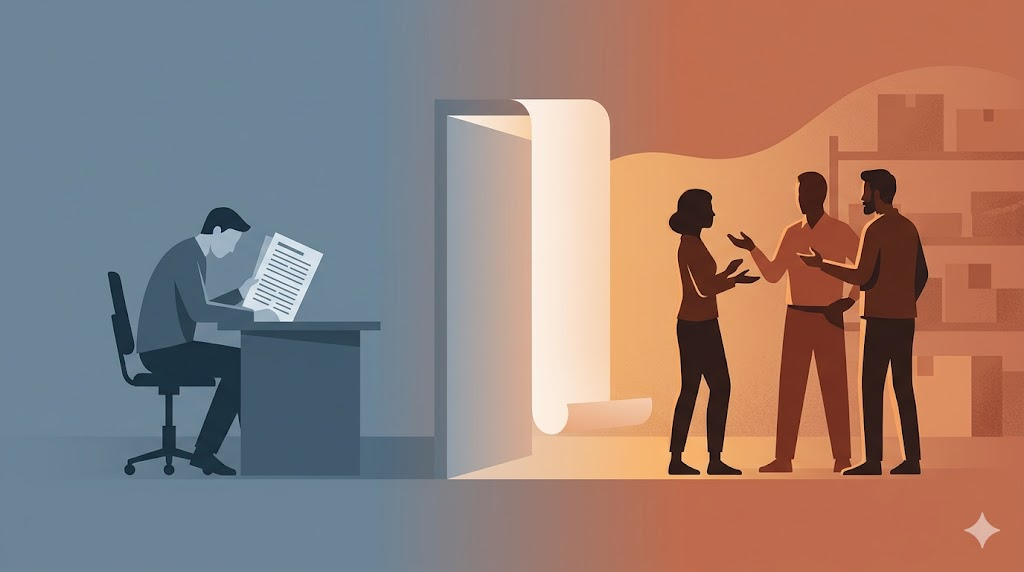
“Nobody says, ‘Let me tell you a requirement.’”
That’s how I put it in a team session recently. We were going through end-to-end testing concepts, and the conversation landed on something I care a lot about: why the word story in “user story” isn’t arbitrary.
People tell stories. When you discover an app that saves you an hour every day, you don’t explain it by listing requirements. You say, “So I was trying to do this, and it kept being a problem, and then I found this thing.” That’s a story. That’s how humans share value.
Requirements are something else entirely.
When Teams Ask for More Detail
I’ve seen this pattern many times: a team complains that the stories they’re receiving aren’t detailed enough. They want more specifics before they feel ready to code.
What they’re actually asking for is requirements. And that request reveals something: they’re waiting to be told what to do.
That’s a different posture than developing software. A contractor executes a spec. A developer develops solutions. Those aren’t the same role, and the distinction matters more than most teams realize.
The reason we call them stories is that a story gives you a person, a context, and a goal. It invites you into a conversation. A requirement skips that conversation and hands you instructions. If you’re asking for requirements, you’re opting out of the most valuable part of the process.
The Story Is the Invitation
Here’s what a story actually is, in practice: it’s an entry point.
Take this excerpt of a story: “In order to maintain an accurate inventory count, as a warehouse manager, I want to adjust inventory for a single lot number.” Treat it as an invitation to understand rather than instructions to execute.
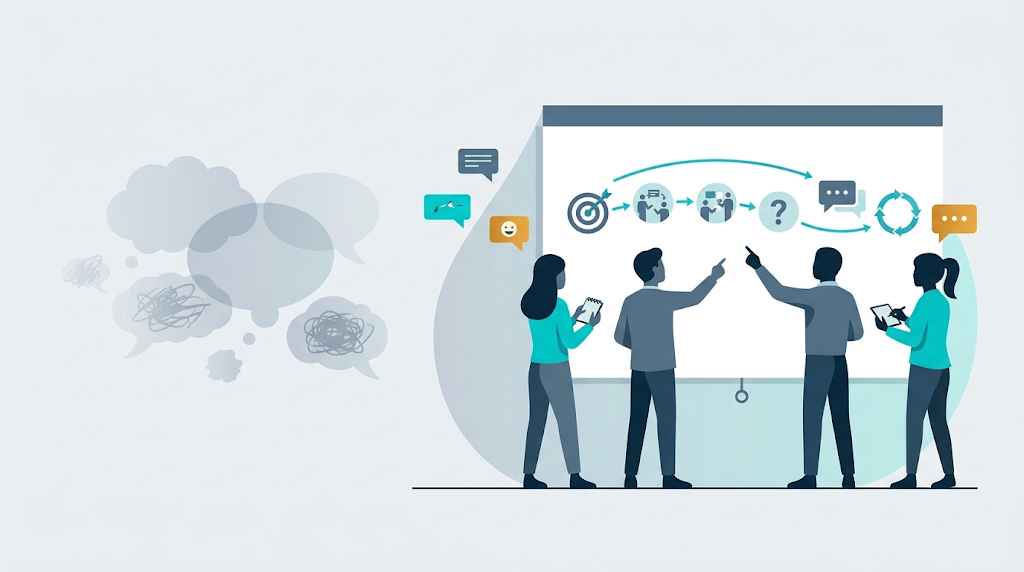
When you sit with that story as a team, you start picturing the person. You picture the warehouse. You start asking: what kinds of adjustments are there? What happens when the numbers don’t add up? When someone’s trying to reduce inventory beyond what’s on hand, what does the business do?
The Edge Cases That Surface in Conversation
When we walked through the lot adjustment story together, one of the team’s developers asked about the “decrease by more than you have” scenario. That question didn’t come from reading a requirement. It came from thinking about the story, walking through it as a human doing a job.
And when you bring that kind of question to the stakeholder, you often hear something like: “Oh, that happens all the time. And right now it’s a nightmare to deal with.” That’s when the real conversation begins.
Who gets affected when it happens? Does it block revenue or cause losses? Is it a daily occurrence or something rare? Does the accountant need to know immediately, or just before closing the books?
Those questions shape the feature’s design. They shape the priorities. They sometimes surface entirely different solutions than the ones initially imagined. You can’t get there from a requirements document. You get there from a story and a conversation.
Developers Develop Solutions
Part of what I keep reinforcing with my teams is this: we are not here to receive instructions and produce code. We are here to understand real problems and develop solutions for the people who have them.
The story format supports that posture. It says: here’s a person, here’s what they’re trying to do, let’s think together about what would actually help them. That conversation is where the design happens, before a single line of code is written.
When the conversation is skipped, something is lost. The team ends up building what was written down rather than what was actually needed. They fix edge cases after the fact rather than surfacing them up front. And they miss the chance to ask the question that might save weeks of work: “What would a two-week version of that look like?”
The Language That Carries Everything
One thing I’ve come to appreciate about well-understood stories is that they become the shared language of the whole team.
When everyone has sat with the story, had the conversation, and agreed on what the warehouse manager is actually doing, that understanding flows into everything downstream. The tests read like the story. The endpoints reflect the business intent. The acceptance criteria align with what the stakeholders described.
And now, with AI tools in the loop, a well-crafted story with shared understanding does even more. When you hand a story to a model trained on how your team works, it can help design endpoints, scaffold tests, and propose implementation options that align with the business context. That only works when the story has been understood, not just copied from a backlog.
A Question Worth Sitting With
The next time there’s pushback that stories aren’t detailed enough, it might be worth pausing on what’s really being asked.
Are we trying to understand a problem together, or are we trying to be handed instructions?
The answer to that question says a lot about what kind of team we’re trying to be.


Leave a Reply