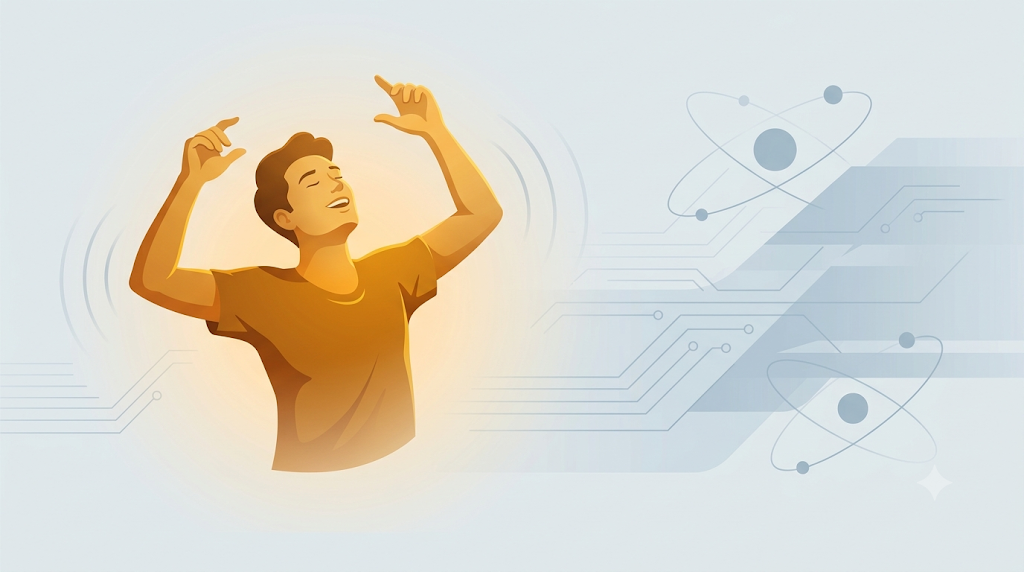
There’s a specific moment in Phil Collins’ “In the Air Tonight” that people can’t resist. You know the one. The song is quiet, almost sparse, for most of its length. Then that drum fill kicks in around the halfway point. I’ve seen people stop mid-conversation to air-drum that part. Doesn’t matter that they don’t play drums. Doesn’t matter that they can’t do anything else in the song. That moment is theirs.
That image keeps coming back to me when I think about how AI fits into my work.
The Orchestrator Framing (and Why It Doesn’t Quite Fit)
There’s a common framing going around: as AI gets better, human developers will become orchestrators, not musicians. We’ll manage the agents, direct the systems, and let AI play all the instruments.
I’ve explored that framing before — how orchestration and conducting aren’t the same thing, how a developer ends up playing Composer, Orchestrator, and Conductor simultaneously. That model genuinely holds.
But something about it still bothers me.
What if I want to play some of the notes?
Not because AI can’t play them better. Not because I need to prove something. But because that slow bend on the guitar, squeezed just right, found at just the right moment in the phrase, is where I find flow. That’s where I lose track of time. That’s where being a developer feels worth something to me personally.
If I hand that off entirely, I don’t become a more efficient orchestrator. I have become someone who no longer experiences what I loved about the work.
What I Actually Want to Optimize For
A while back, on a podcast, I said I care about how human stories get told. But when I really examined it, what I care about isn’t the writing itself. It’s the conversation. The facilitation. Sitting with a group of people, drawing out the real need behind the request, getting to the thing that actually matters.
Someone (or something) can turn that into clear, well-formed stories. I’m not precious about that step. But the conversation? That’s the air drum moment for me. Don’t automate that. Don’t do it for me.
This matters because we often focus only on one question: “What might AI do for me?” Maybe we should also ask, “What do I want to keep doing myself?”
Scaling the Things You Love
Here’s where the framing shifts for me: AI doesn’t have to be about replacing what I enjoy. It can be about scaling it.
I can’t clone myself. There are only so many stories I can help shape, so many problems I can work through in a day. But if I can direct AI to do more of that kind of work, through my principles, my approach, my way of thinking about things, and I still get to do some of it myself, at my own pace, in the moments where I find flow? That’s genuinely appealing.
The things I don’t enjoy are also important here, but for the opposite reason. I don’t lose track of time doing those things. I don’t find flow in them. So delegating them to AI isn’t a loss. It’s clearing the runway.
The Duck Is Fine, Actually
There’s a Brazilian saying: “The duck can walk, swim, and fly, but doesn’t do any of those well.” The usual advice is: don’t be the duck. Specialize. Go deep.
But I think about myself as a musician. I write music, play guitar, play drums, and try to sing. None of those at a professional level. All of them have flaws and imperfections. And I genuinely love all of it.
I could run my rough recordings through AI tools to make them sound studio-ready. Better vocals, tighter bass lines, polished production. But I don’t want that, because I’m not making music to sell it. I’m making it because I enjoy the process. Because I get lost in it.
The duck is fine. The duck is having a great time.
“I’ve Automated My Whole Life”
I keep seeing content with titles like “How I Automated My Whole Life” and I find them genuinely baffling.
What does that even mean? If someone loves playing video games, automating gameplay defeats the entire purpose of having the game. We do automate game testing because that serves developers. But the experience of playing is the point.
The goal isn’t to automate everything. The goal is to automate the right things so you have more time for what actually matters to you.
Being Deliberate About Flow
We need to be intentional about what brings us flow and protect it.
Not just delegate the things we don’t like, though that’s important too. But actively identify the moments where we lose track of time, where we feel most alive in the work, and make sure those moments still happen. Frequently.
AI can help us scale and sustain that. It can do a hundred things, so we can do one, well, at our own pace. That’s not inefficiency. That’s how we stay human in the work.
The air drum moment is worth keeping. Even if you can only play that one part.
Measure productivity not by how much we get done but by how many moments we spend being present. – Allan Watts



Leave a Reply