I once put off learning a new video editing tool for months. Not because I did not want to make videos. I wanted to. I just did not have the skill yet, and every time I opened the software I hit a wall. The gap between my intention and my ability felt bigger than I wanted to admit.
When I finally forced myself to look at why, the answer was clear. It was not a motivation problem. It was a skill problem. That is the “hand” side of procrastination, and it is the one people misdiagnose most often.
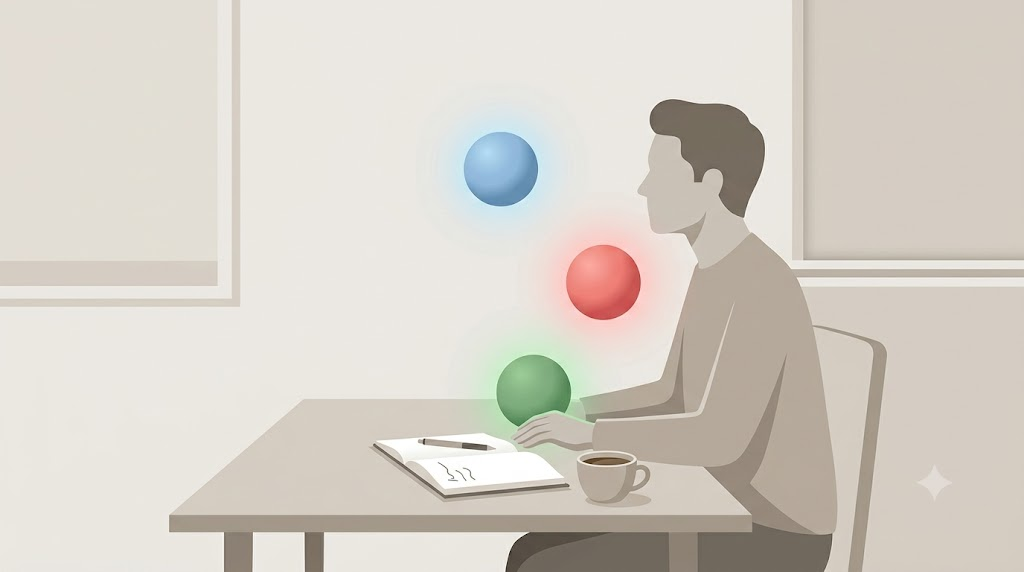
Anne-Laure Le Cunff, the author of Tiny Experiments, has a useful frame for this. She says procrastination usually comes from one of three places: the head, the heart, or the hand. I have found that simple model more useful than a hundred productivity hacks.
Head: You Know What to Do, But You Do Not Want To
The head version of procrastination is mental resistance. You know the task. You know how to do it. You just do not want to. It might be boring. It might be tedious. It might require focus you do not have at the moment.
This is the easiest one to ignore because it feels like laziness. You tell yourself you should just push through. Sometimes that works. But often the problem is that the task is not properly sized. The work feels too big, or it is unclear where to start.
When I feel this, I shrink the task. Instead of “edit the video,” I make it “find the first ten seconds I want to keep.” Instead of “write the blog post,” I make it “write one bad paragraph.” The resistance is usually about the size of the task in my head, not the task itself.
Heart: You Are Not Invested
The heart version is harder to admit. You do not care. The goal does not matter to you. It might matter to your boss, your spouse, or your culture, but it does not matter to you.
I have set goals before because they looked good on paper. Learn this framework. Read this book. Build this side project. They failed because my heart was not in them. I was going through the motions.
The fix here is not discipline. The fix is honesty. Ask whether the goal connects to something you actually value. If it does not, drop it or reframe it. Sometimes you can link a boring task to a deeper value. Sometimes you realize you were chasing someone else’s goal and you let it go.
Hand: You Do Not Have What You Need
The hand version is practical. You want to do the thing, but you lack the skill, the time, the money, the tools, or the help. This was my Final Cut Pro problem. I was not lazy. I was under-equipped.
The hand problem is the one people are most likely to misdiagnose. We beat ourselves up for procrastinating when the real issue is that we need training, a budget, a mentor, or a smaller first step.
My breakthrough came when I made it a tiny experiment. I gave myself a quarter to learn just enough to do a simple edit. I was not committing to becoming a professional editor. I was committing to one small, defined learning period.
A few months later, that skill showed up in videos I had wanted to make.

The More Important the Goal, the Harder to Start
There is a strange paradox here. The more important a goal is to me, the more likely I am to procrastinate on it. It sounds backwards, but it makes sense. If the goal matters, the stakes feel higher. If the stakes are higher, I am more afraid of messing it up. So I wait.
One thing that helped me was reframing the work as playful. Not playful in the sense of not caring, but playful in the sense of being curious about what will happen. Instead of “I must produce a great video,” I say “I wonder what happens if I try this.” That lowers the stakes without lowering the intention.
The Triple Check
Now, when I find myself procrastinating, I run the triple check.
Is it my head? Do I know what to do but feel resistance? If so, shrink the task and start small.
Is it my heart? Do I not care about this goal? If so, reconnect it to a value I care about, or let it go.
Is it my hand? Do I lack a skill, resource, or support? If so, get the training, ask for help, or redesign the first step.
Procrastination is not a character flaw. It is information. It is your brain waving a flag and saying something is off. Stop calling yourself lazy and start diagnosing which of the three is speaking.



Leave a Reply