
I have been tracking my goals for years, and the system I use is embarrassingly simple. Two columns. The date, and what I did. That is it.
No dashboard. No complicated metrics. No wearables feeding data into a spreadsheet I never open. Just a log that answers one question: when did I do what?
That is enough.
The Spanish Log
Years ago, I wanted to get better at Spanish. My goal was to be able to give a talk in Spanish and to travel to a Spanish-speaking country and actually speak the language. Those are big, lofty outcomes. I did not start with a curriculum. I started with Duolingo and a commitment to five minutes a day.
Every day I logged it. “Today, five minutes of Duolingo.” “Today, ten minutes.” “Today, learned these words.” Some days it was barely anything. But the log kept me honest.
At the end of the month, or the quarter, when I felt like I had not made progress, I could look back and see the truth. I had worked on it almost every day. I had learned words I did not know before. I was not a failure. I was just impatient.
The log is an antidote to the inner critic. The inner critic remembers one missed day and forgets fifty good ones. The log does not lie.
Do Not Track What You Will Not Use
It is easy to get seduced by tracking tools. Smart devices, sensors, apps that promise to measure everything. The problem is that most of us collect data we do not understand and never review. We end up with beautiful charts that answer questions we are not asking.
I prefer to track only what I will actually use. If I am not going to look at it in a weekly review, I do not track it. If I cannot explain what the number means, I do not track it. Tracking is only useful if it leads to a decision.
For reading, I track daily minutes. I have a target of thirty minutes a day on average over the last thirty days. That is one number. If I am below it, I adjust. If I am above it, great. I do not need a graph. I need a number and a decision.
That reading habit eventually turned into a Read Better series of videos and blog posts.

The Weekly Review
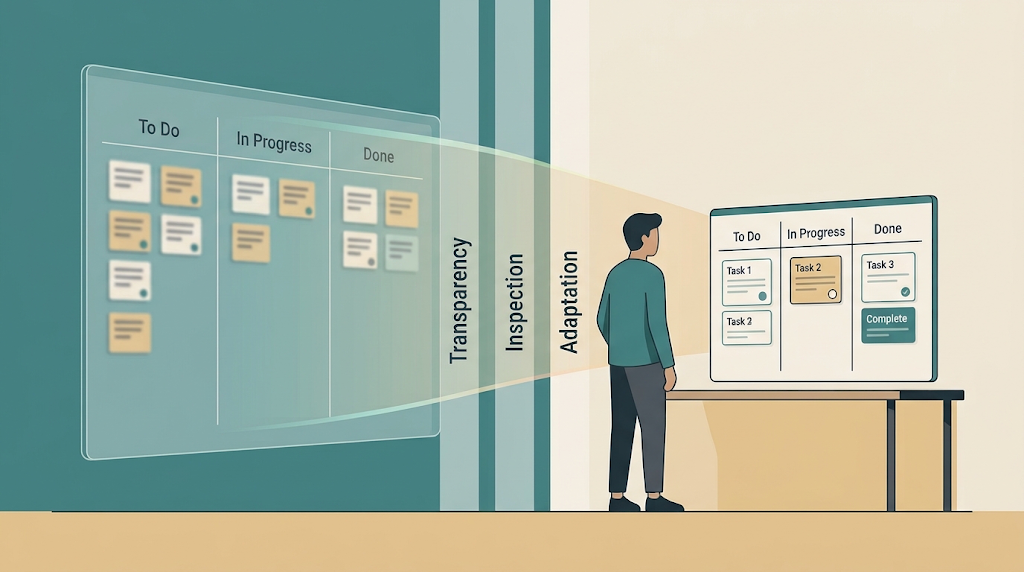
Tracking without reflection is just data entry. The real value comes from the weekly review. Once a week, usually Saturday or Sunday, I look at my log and ask three questions.
What did I do this week? What got in the way? What did I learn?
The first question is about honesty. The second is about obstacles. The third is about insight.
Sometimes the review shows me that a goal is stealing time from a more important one. Sometimes it shows me that I am busier than I thought and need to shrink a commitment. Sometimes it shows me that I have been inconsistent because the goal no longer matters to me. The log makes those patterns visible.
Hindering Habits
One thing I look for in the review is hindering habits. Not bad habits. Hindering habits. A habit is only bad in relation to what you are trying to do.
I want to read more in the morning, but I have a habit of going to bed late. That habit is not inherently bad, but it hinders my morning reading goal. Seeing that connection in my log and review makes the tradeoff clear. I can either protect the morning reading by going to bed earlier, or I can admit that morning reading is not a priority and drop it.
The log does not judge. It just shows the pattern. You make the call.
Prepare for the Check-In
Tracking also helps me prepare for accountability partner check-ins. If I know I am meeting my partner on Tuesday morning, I will do the work by Sunday night. I do not leave it to Monday because life happens. I protect the time because someone else is showing up for me.
That external commitment only works because I am already tracking on my own. The partner is not my memory. The partner is a mirror. When I bring my own log to the check-in, the conversation is based on data instead of performance. That is why the next step, choosing accountability partners, only works if the tracking is already happening.
What to Track
If you are starting from scratch, track less than you think you need. Pick one goal. Track two things: when you worked on it, and what you did. Do that for a month. Then review it.
Do not optimize the system before you use the system. A cheap notebook works better than an app you never open. A text file works better than a dashboard you do not understand. The best tracking system is the one you actually use.
You do not need more data. You need the right data, reviewed at the right time.



Leave a Reply