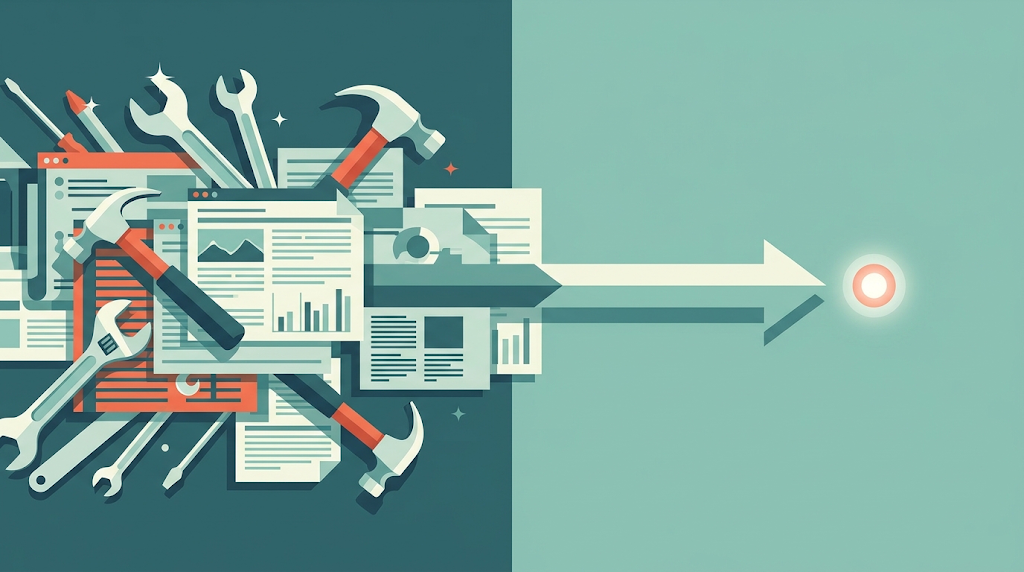
I was in a meeting once when a business leader described what they thought IT people did. Not what we actually do, but what they believed. They talked about the people who fix the printers, set up the network, run the cables and the wires. It was a perfectly reasonable description of a part of the job, and it was missing almost everything that matters. It stuck with me, because it explained so much.
That perception is not rare. Over the years I have heard it again and again, from business people who do not think of us as consultants at all. They do not see the kind of work we do as IT in the first place. They see technicians. And that gap in perception is one of the reasons we spend so much time on trust, and one of the reasons I think about the name of our profession.
An Improver asked me about this during my tenth anniversary Lunch & Learn at Improving. They asked, what is the thing we can do to change the perception of people, the way they see us, so they take us as a consultant instead of just an IT person? It is a great question, and it deserves a longer answer than a meeting allows.
The trust problem underneath
To understand the perception problem, you have to understand the trust problem underneath it. Before I joined Improving, I had at least four or five situations where business people came to me and said the same thing: I trust you. They said it like it was a compliment, and it was. But it also puzzled me — and I have written about the one example that finally got my attention in the post about the biggest surprise when I joined. What stuck was the gap it pointed to: people rarely trusted IT people as a group, only the individual in front of them.
I spent years turning that over. I identified some things, but the biggest shift came when I realized the perception problem was not just about behavior. It was about the frame we put around the work. If people believe we are technicians who handle machines, they will treat us as technicians. If they believe we are consultants who solve problems, they will trust us as consultants.
Drowning in information, starving for wisdom
IT stands for information technology, and I have grown uncomfortable with that name.
There is this target fixation on information and technology. Information is not the scarce resource anymore. Everybody has information at their fingertips. The whole world is drowning in information. What we are actually starving for is wisdom. We have more data than we know what to do with, and very little sense of what any of it means or what to do next.
So I wonder about the technology half too. Do we really need to solve everything through technology? A lot of technologists get so stuck in the technical concerns that they forget about the people they are supposed to serve. I have written about this before, in a post called Impact Technology: Rethinking Information and Wisdom, where I first tried to pull this whole idea apart, and in What Does IT Stand For?, about the ladder from data to information to wisdom.
The mechanic with the new tools
I explain what it feels like from the other side with an analogy. Imagine you take your car to a mechanic because it is making a weird noise. You want the noise fixed. That is the problem you came in with.
Now imagine the mechanic cannot stop talking about their tools instead. Look at this new wrench I got, it is the latest wrench, but there is one coming out next week that is going to be even better, it is going to destroy everything. Oh, and check out this new hammer, and this new model, and this new harness. Meanwhile your car is still making the noise and nobody has talked about it.

That is what a lot of business people hear from technologists. We are obsessed with the tools and the information. There is a new front-end framework, a new skill, a new model from some company. Great, buddy. You have the tools and the information. But what knowledge have you acquired from it? What insights are you gathering? How is any of that making you wiser, and what positive impact can you make from all of it?
I used that exact thought to shape a post about why the tools are never the point. It is called Mastery Over Tools, and it is about the difference between collecting tools and actually being able to help someone with them.
Build around problems, not tools
The people who have told me they trust me have all said it for the same reason. When I talk to them, I am not talking about bits and bytes, keyboards and mice. I am not telling them about the newest wrench I got at the hardware store. I am asking about their problem. What exactly is going wrong for you? If we did this thing here, would that make a positive impact for you?
That is the whole difference. When I frame the conversation around their problem and the impact, they stop seeing a technician and start seeing a consultant. They say,* Can we do that?* Yes, we can. And then, when the thing actually helps them, they say, yeah, I trust you. Because you are not in here bugging me about your new tools. You are solving my problem.
This is the shift we can make, and I think it is the answer to the question that Improver asked. To be taken as consultants, we have to stop talking about what we use and start talking about what we change.
Information Technology or Impact Technology
I keep pitching people a reframe. Instead of IT as information technology, what about IT as impact technology? Can we drive positive impact through technology?
I like that because it moves the center of gravity. Information technology puts the attention on the information and the technology, the stuff we collect and the stuff we build with. Impact technology puts the attention on the outcome. It asks the question every consultant should ask. What did this change for the person we were serving?
That is also, I have come to believe, the path to trust. Trust is not built by demonstrating mastery of tools. It is built by consistently helping people solve the problems they actually have, and by talking about their world instead of ours. When people say they trust me, it is because I showed up around their problem, not around my framework.
The perception problem is not really about us at all, or not only about us. It is about the story we tell about what we do. As long as we tell the story of information and technology, people will hear technician. When we tell the story of problems and impact, people start to hear consultant.
We are drowning in information and starving for wisdom. The way out is not more information and not better tools. It is wisdom, and the discipline to aim it at real problems.



Leave a Reply