
Picture a team working on something with AI in the loop. The engineers are generating and wiring code at a pace none of us could match a couple of years ago. Meanwhile, the business analysts and product owners are writing their own prompts, getting their own drafts back, and moving faster too. Then somebody proposes dividing the room: the technical people on one side, the business people on the other, so each group can work without slowing the other down.
I prefer a different arrangement, and the racing analogy explains why.
The paddock is one room
In racing, the strategy does not live with one person. Everybody is in the paddock or the garage before a session, in the same space. The driver describes what the car is doing and how it feels. The engineers look at the data and line it up against what the driver is reporting. The mechanics make sure the car is ready to go as fast as it can go. Nobody hands the driver a sheet of coordinates and sends them out alone.
The driver is the one going fast, but the decision about which way to point the car is made by the people who have the rest of the picture. The fastest car in the wrong setup is still in the wrong setup.
The version where it costs lives
A racing analogy is friendly because a bad afternoon at the track costs a race. Swap in a rocket ship and the stakes get clearer.
The crew goes through special training to handle the forces and the situations that come with going that fast. They can fly the machine perfectly and still be aimed at the wrong place. A launch can go exactly as planned, the crew can do everything right, and if the plan itself was pointed somewhere else, the mission still ends somewhere else. The people flying the ship are the ones who find out last.
That is why the people who plan and the people who execute have to be in the same place, at human pace, working out the plan together. Each perspective catches what the other one cannot see. The person closest to the controls knows how the machine feels. The people further back know where the machine is pointed.
The plan is cheap to fix while it is still a conversation. Once the crew is moving fast and committed, the only thing left to adjust is how they feel about where they are going.

The label is out of date
We usually split things into technical versus non-technical. I do not think that distinction holds anymore.
The people we used to call non-technical are now prompting AI for their own work. They are drafting, analyzing, and producing at a pace that was not available to them before. The old division assumed one group had the tools to move fast and the other group had to wait. That assumption is gone.
Which means the work of the engineers now depends on a group that is also moving quickly, and often in a direction the engineers have not seen yet. More speed on both sides of a wall makes the wall more dangerous, not less.
What keeps a fast mission safe
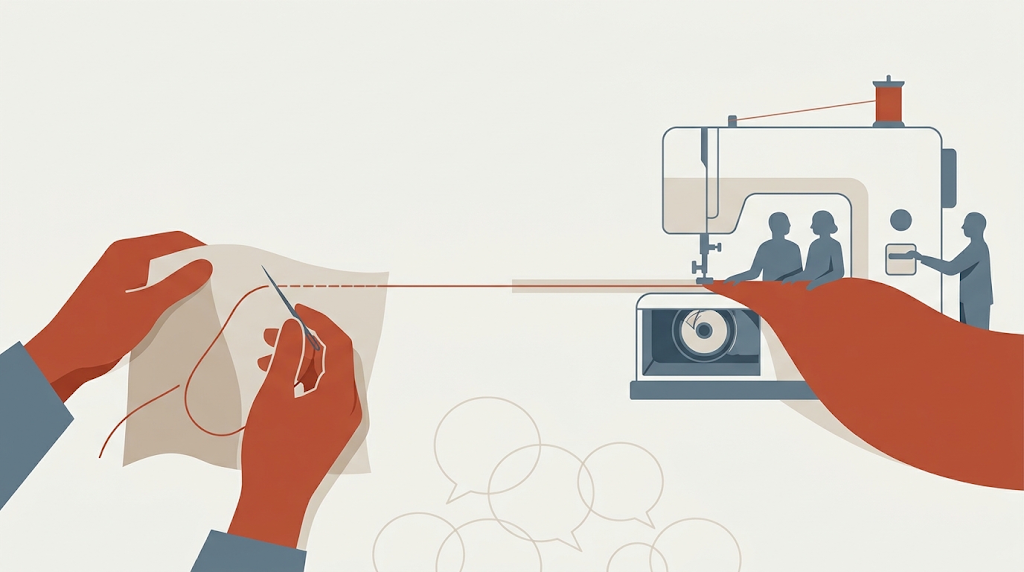
Pairing. Conversation. Collaboration that runs through the whole process instead of happening at the handoffs.
None of that is a speed brake. It is the thing that makes the speed usable. A team that talks to each other continuously corrects the course while the course is still cheap to correct.
I have spent years arguing that developers should understand the business. I am making the same argument in the other direction now. The business needs to be in the room with the developers, especially once both of them can generate output faster than either of them can review it. The room is where the coordinates get checked.



Leave a Reply