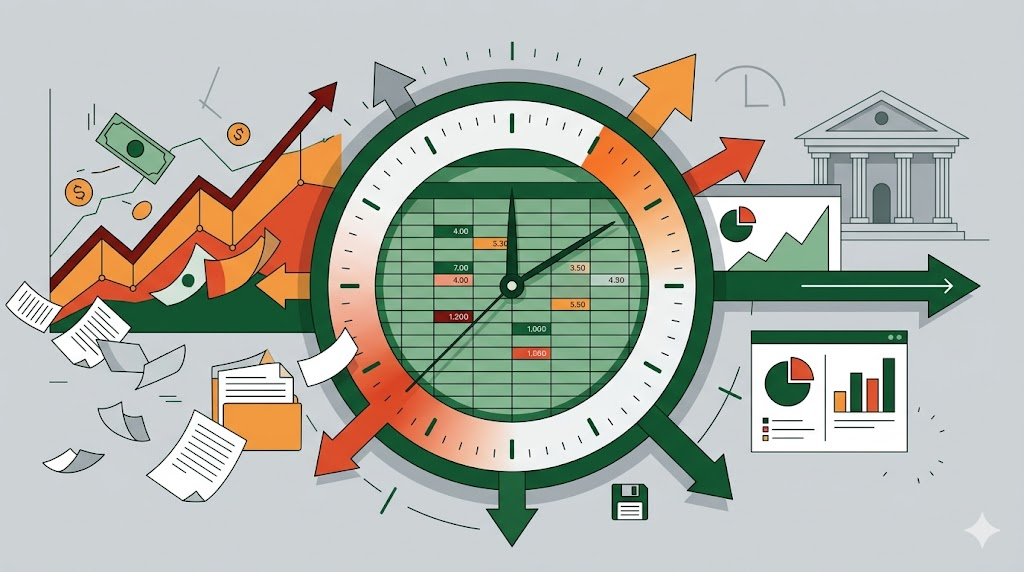
I was 15 when I became responsible for my employer’s cash flow during Brazil’s hyperinflation.
It started with running errands. Every morning, I’d go to the bank to get the previous day’s statement. Every afternoon, I’d wait until the very last minute before the 4:30 closing to take payments and deposits.
I didn’t understand why the timing mattered so much. Why couldn’t it wait until tomorrow?
Then the account manager started letting me in after the bank closed to the public. She’d tell security to expect me, tell the cashiers to process my transactions even after 4:30. I felt special. She said it was because of the business we brought them, but also because of how I asked questions and tried to do the right thing.
That’s when someone at my company said, “This kid shouldn’t just be running errands. He should be managing our cash flow. He knows how to use computers. He knows spreadsheets.” This was the early 90s.

Numbers on a Black Screen
The spreadsheets were green numbers on a black screen. Lotus 1-2-3. Rows and columns of data that I had to make sense of.
I learned how to use conditional formatting so certain numbers would stand out. When a number caught my attention, I had to know what question to ask next and what action to take.
The questions were always the same: Do we have enough in the bank account to cover today’s payments? If not, do we pull money from the short-term investment accounts? What are the late fees versus the interest we’re earning? Should we keep the money invested and pay the late fee, or pull it and pay on time?
The timing mattered because of hyperinflation. Decisions had to be made every hour. We’d delay until the last possible moment to gather as much information as we could, then act.
If we needed to pull money from investments, we had to do it the day before, at the last moment, so it would be available for payments by the end of banking hours the next day.
I was 15. I didn’t fully understand what I was doing. But I learned that spreadsheets put numbers in front of you so you can see clearly and decide what to do next.
When Spreadsheets Weren’t Enough
Eventually, the spreadsheets became a bottleneck. We needed to do more than they could give us.
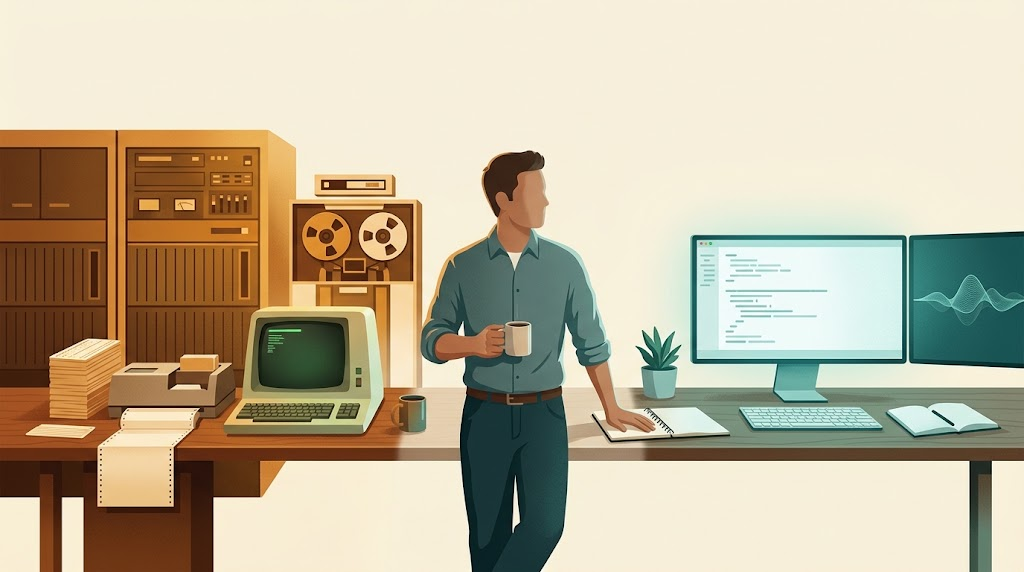
I learned to add buttons that would collect information and create new spreadsheets with formulas already configured. Then I learned dBase programming to create databases. Then, Clipper will build more complex applications.
I wrote software for the real estate business. I automated the sending of payment information to the bank (on floppy disks), generated customer invoices that would appear on our bank statement, and performed bank reconciliation.
All of it came from those early days staring at green numbers on a black screen, trying to figure out which decisions we had to make before inflation ate away at our money.

What Stayed With Me
Those lessons were internalized. When I look at data now, I automatically ask, “What am I trying to see?” What decisions need to be made?
The boss told me, “This inflation thing is bad for business. When you see those numbers like that, you need to make a decision. You need to work with our investments to make sure those amounts are transferred so we don’t lose as much money.”
I was doing the thing without fully understanding it. But it stayed with me.
Every software project I’ve worked on since, I’ve seen the same pattern. People export data to spreadsheets because the system won’t answer their questions. They model the problem, experiment with possibilities, find the answers they need.
The spreadsheet is where they go to think clearly about decisions that matter.
The Real Problem
Hyperinflation was the real problem I had to deal with. The spreadsheet was the tool that let me see it clearly enough to act.
The numbers changed every hour. The decisions had to be made with incomplete information. The timing was everything.
That’s what spreadsheets gave us: a way to put the information in front of us, highlight what mattered, and decide what to do next before the situation changed again.
It wasn’t about the formulas, the conditional formatting, or the automation. It was about having clarity in chaos.
That lesson still holds. Whether it’s hyperinflation or just the normal complexity of running a business, people need to see their information clearly enough to make decisions.
The tools change. The needs are different, but still there.




Leave a Reply