
AI agents are compressing our work. Tasks that used to take hours now take minutes. We’re getting faster, more productive, more efficient.
But here’s the uncomfortable question: what happens when you put a ten-times-more-powerful engine into a car that wasn’t built for it? The car might go faster for a moment. Then the frame starts to shake. The tires shred. And the human behind the wheel? They can only handle going that fast on a straight for about five minutes before they’re exhausted.
The faster you go, the harder it is to steer.
In this conversation with Matthew, we explored what it means to slow down in an accelerating world. We talked about racetracks and video games, about Duolingo streaks and meditation apps, about the gap between software builders and the people who actually use what we build.
Before racers ever get in their cars, they walk the track.
Learning the Track
We talked about racing games and how starting with a slow car teaches you the track. You learn when to brake, when to turn, and where the apexes are. If you start with the fastest car, you blow past everyone at the start line, but you never learn the intricacies of the track. You’re just flying straight and hitting the grass on the turns.
Matthew brought up the Bugatti Chiron—a car that can exceed 200 miles per hour. But they had to engineer special tires because normal tires can’t survive that speed. The example translates directly: maybe the engine fits, maybe the car starts, but once you get above 120 miles per hour, you’re seeing challenging issues. And you’re the person behind the wheel, having to contend with them.
Walking the Track
At the highest level of racing, the first thing racers do before they even get in their suits is walk the track. Not drive it. Walk it.
They’re looking for changes since the last time they were there. Has the asphalt degraded? Is there a new seam? Has the earth shifted? One racer at a MotoGP event fell at 190 kilometers per hour because he took a corner the same way he did last year, but there was a bump that wasn’t there before.
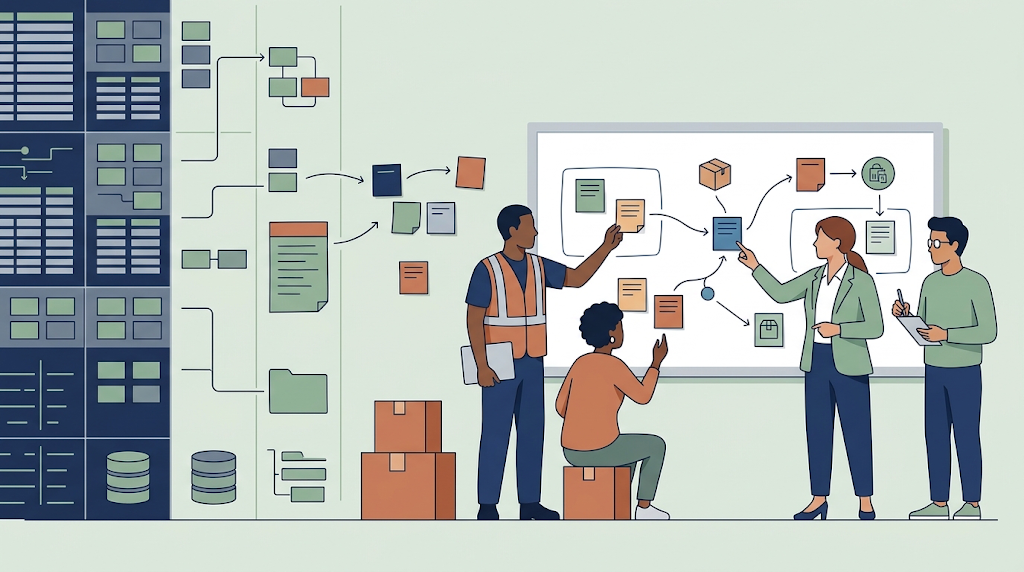
This applies directly to building software. If you’re building a system that people use in a warehouse, go to the warehouse. See what they have around them. It’s loud, noisy. They’re wearing gloves, so they can’t use the touchscreen. They have to remove them.
All these nuances you only get when you go as slowly as you can.
The Gap Between Builders and Users
Matthew brought up a pattern we see a lot: people at small tech startups trying to solve education problems by putting AI into classrooms without ever having set foot in a classroom. They’re thinking through the problem from a distance, trying to figure out how kids learn and how to accelerate that learning.
But they’re not in the classroom experiencing it.
The gap is that we don’t get input from the people who will ultimately use these tools. We’re more concerned with what they’re seeing on the screen, not necessarily how they’re interacting with it on the ground.
I started developing software by being there with the people who had the problem. Sitting next to them. I used to be one of the people who used systems and had problems. Then I started programming.
From the mid-90s on, it was always: don’t just give me requirements. I want to go walk the track. I want to see the people we’re trying to help. What do they have on their desks? What stickies are on their computer screens? What’s on the walls? If it’s up on the walls, it’s because it’s hard to find in the system.
The User as Afterthought
A lot of folks who got into software development in the early 2000s learned at school. They come out expecting requirements. When you click this button, it does this. When the user enters this information and clicks that button, it does so.
But they never see that person as a person. It’s always “the user.”
That is a person out there performing a job. And when we build for “the user” and put these tools in their hands, the user says, “I don’t like this. How does this help me? This is actually slowing me down.”
The simple solution is to go and sit where they work. Learn what their concerns are. Use their manual processes. Then you can think about the problem in a way that will actually be helpful.
Instead, we’re often in a separate place, thinking about a problem we don’t fully understand and building a solution based on limited information. The actual person we call the user becomes an afterthought.
Gamification and Dark Patterns
This brought us to gamification. We’re not saying gamification is inherently bad. There are ways it can serve the person using the tool, keeping them engaged in healthy ways.
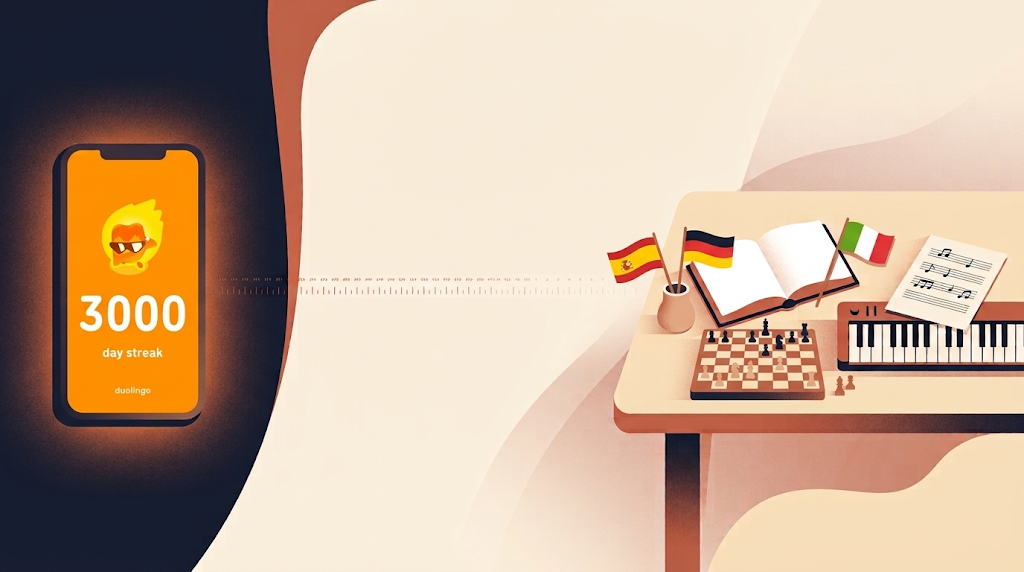
But the patterns we typically see are different. Take Duolingo. After you finish a session, you can see whether your friends have completed their Duolingo for the day. You can pester them to do it.
When someone does their Duolingo in response to that pressure, are they doing it to learn? Or are they checking the box?
We believe it’s the latter. The true intent of the platform isn’t learning—it’s keeping the user engaged.
Duolingo has a pattern where even if you break your streak, you can continue it if you’re willing to pay. This is a dark pattern. If you break your streak, you’ve broken your streak. It should be that simple.
The fact that you can pay to continue your streak is the tell. It’s proof of the actual intent: maintaining the streak.
The Behavior We’re Engineering
I’ve been on Duolingo for 12 years. I’ve been on Headspace for about 10 or 11 years. I kept working on my streaks throughout.
The behavior I wanted was to always be learning something every day. That’s a behavior that exists outside the context of some app. The behavior I’m here for is to learn.
But there was a point in 2015 when I was going for the one-year streak on Headspace. There were days when it was almost midnight, and I’d start the meditation session but not actually meditate. I’d keep doing whatever I was doing just to not break the streak.
After a few days of that, I had to ask myself: wait, why am I doing this again?
The company engineered that behavior in me, and it was the exact outcome they were pursuing. Whether I’m meditating or not is irrelevant. They want me to start the process and end it ten minutes later. Keep the streak.
You can see where other users are and measure yourself against them. But you’re measuring yourself against someone else’s streak who might be doing the same thing—starting the app, continuing to work, just to maintain the streak.
The creators know this behavior exists. They built with that in mind.
Supercomputers Pointed at Your Brain
What unsettles us is this: as humans, if we deliberately work at understanding how we behave, it takes years. To really understand what triggers us, what makes us feel a certain way, whether we’re impulsive buyers. It takes a lot of effort, and not everybody takes the time to go through that effort.
But the big companies have supercomputers pointed at your brain. They know your behavior way before you do.
It’s unsettling, but we’re helping them every step of the way.
Imagine all the big players—Uber, Duolingo, any app we’re contributing information to freely—what if they all got together and exchanged data with each other? They could surface patterns about individual users and target them in ways they couldn’t without each other’s data.
I know what time you prefer to eat because you use Uber Eats multiple times a week. I know the amount of calories you’re getting. I know you may even have heart trouble because you’re eating hamburgers every night. I know information about your health, and it’s not because you’re using a health app. It’s because I can look at all these different behaviors and paint a picture of you.
We’re sharing so much about ourselves that other people can paint pictures we can’t even see.
Just as difficult as it is for us to notice our own behavior, it is very easy for them to notice ours because they’re pointed directly at us. You can use this app for free. Just tell me how your day went. What you’re thinking about. What posts are you liking? How much time are you spending looking at this image?
All this metadata adds up.
Instant Gratification and What We Lose
We talked about delayed gratification and how it’s been harmed. Some people have never even had the opportunity to develop it, especially younger kids today. Everything is on demand.
This goes back to the video game conversation. What if you could just make an in-game purchase so you don’t have to grind on the smaller, slower cars? You can just buy the Toyota Supra right away and all the upgrades. You beat everyone else, and it harms the gaming experience for everyone involved.
When I was a kid playing video games, to get a cheat code, I had to save money from what I’d get from my parents and family. Then I had to walk four blocks to a newsstand to buy a magazine with the cheat code on page 135.
Even though you’re technically cheating in that context, there’s still a delay. You can’t just have that magazine immediately. You had to earn. You had to save up.
Even in the context of wanting to skip the line a little bit, you still had to go through this grinding process.
The Value in the Line
I shared a story about Trevor Noah talking about amusement parks. He remembered growing up, going to the park with friends, and waiting in line for an hour or two to get on the ride. Then he became famous and could skip the lines. And it wasn’t fun anymore.
We enjoyed it because of the time spent waiting in line with friends. Meeting new people. Getting to the front of the line and realizing you’re still under the height requirement. All of these things matter.
The anticipation. The delayed gratification of knowing you’ll eventually be five feet tall. But now you have to grind towards that. You have to wait. You have to imagine what it’s going to be like when you’re eventually able to get on this roller coaster.
The real value isn’t in the instant gratification. You’ll have the thing, but you won’t experience it in the way that people who had to wait experienced it. People who had the conversations, who met new people, maybe the love of their life in the line.
After you both get off the roller coaster, you can’t enjoy it in the same ways. The person who waited two hours can talk about that experience. The person who walked to the front of the line? What are they going to talk about?
What Society Looks Like Without Forward-Looking
One thing that kept coming up: having something to look forward to. Looking forward to unlocking that power with your character. Unlocking that car. Unlocking that life experience.
What does society look like when we are no longer forward-looking because we want everything now?
What happens to people who are used to having everything right away when they’re put in situations where delayed gratification is required?
The people used to waiting in line? It’s going to be nothing for them. But for the person who has always been able to skip the line, waiting with everyone else is going to be painful. Terrifying. Unbearable even.
Because they know nothing about it. Everything has come on demand.
The Power of Constraint
We saw an advertisement for refurbished iPod minis—the ones that didn’t even have a screen, just 200 megabytes of storage, maybe 50 or 60 songs. The line to customers was: “Downgrade now” instead of “Upgrade now.”
We think people are starting to feel the burn of having everything on demand and are longing for the days of not even knowing what song would come up next.
It goes back to the power of constraint and the paradox of choice. Having more options does not equal being happier.
I have my iPhone with the full discography of Rush, Black Sabbath, Led Zeppelin, and Pink Floyd (some of the bands I grew up on). What am I going to listen to now? Thirty minutes later, I still haven’t decided. I’m not happy because I haven’t been listening to music. I’ve been trying to select.
As opposed to: I have two albums. I either listen to this one or that one. Or this is just a music player, so all I have to do is hit play. Whatever comes up, maybe I have some options like skip and forward. But at the very beginning of this process, I will be listening to music instead of searching for the right thing to listen to.
Slowing Down to See What’s There
We wrapped up by coming back to where we started: the sense of overwhelming. When I gave one of my AI talks last Friday, I started by asking if anybody felt overwhelmed. Pretty much everybody said yeah.
The answer? Slow down. Take the time to slow down and just look around.
I see the road over there with cars speeding by. I don’t have to be there. I can get in my own car and go when I want to.
Walk the track first. See what’s actually there. Then decide how fast you want to go.


Leave a Reply