When was the last time you cleaned your weed eater?
Not changed the string. Not cleared a jam. Actually cleaned the body of the thing, scraping away years of matted grass that never stopped it from working, but probably should have been dealt with long ago.
Matthew and I started there in this episode, but we ended up somewhere much bigger: the practice of maintenance in a world that only rewards us for reacting to problems, not preventing them.
The Things We Only Fix When They Break
Matthew brought up his weed eater as a perfect example of something that works fine while slowly degrading. The grass keeps getting cut. The motor keeps running. But underneath, there’s a buildup that nobody sees, and nothing forces you to address it.
We’re very good at this in software. We have logs, monitors, and alerts. We know when something breaks. We respond.
But what about the things that don’t break? What about the relationships that slowly drift? The tools we use every day that accumulate friction? The passport that expires in six months, when your trip requires it to be valid for another year beyond that?
We don’t have dashboard lights for those things.
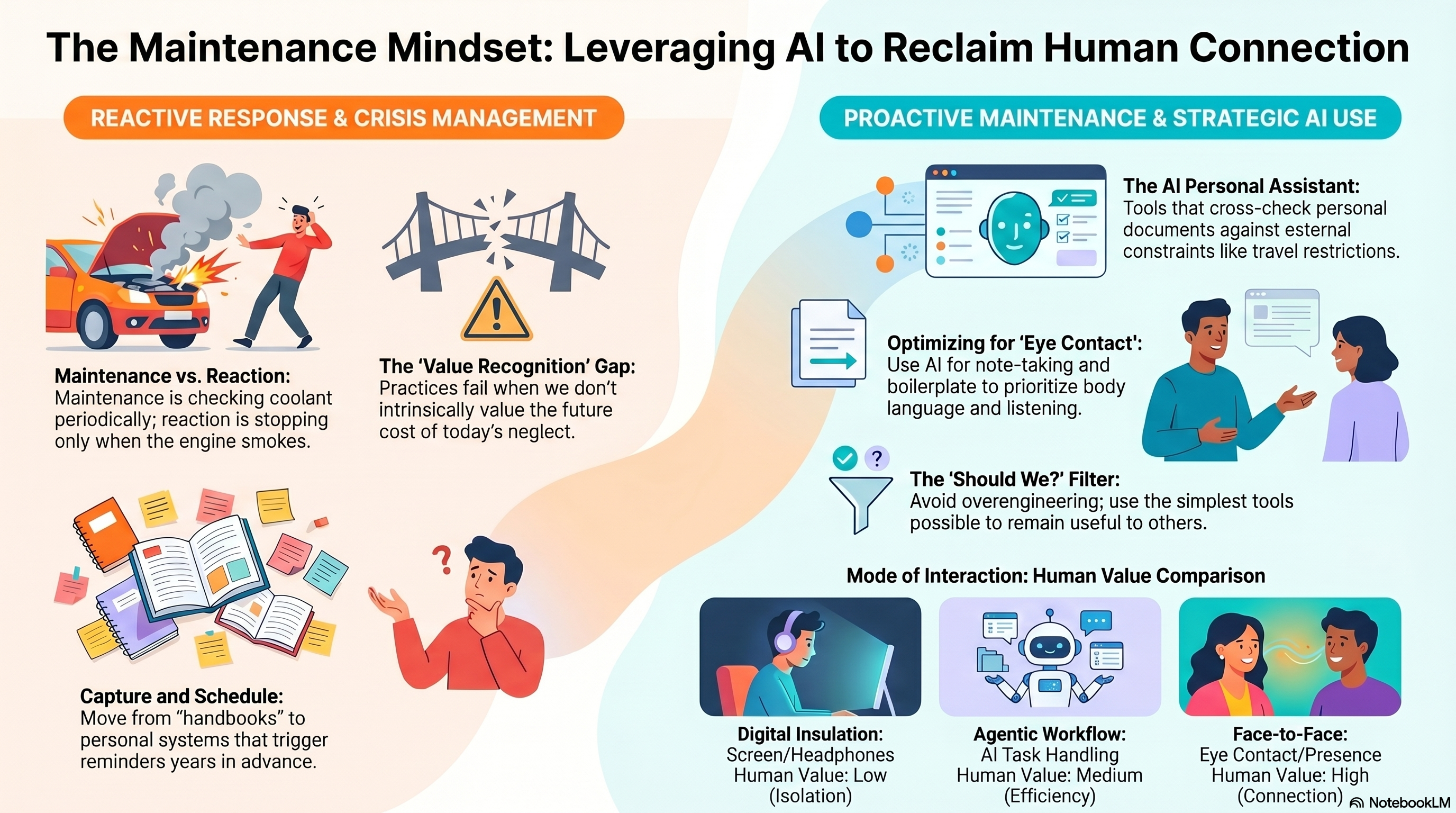
Maintenance vs. Reaction
The conversation turned to cars, because of course it did. Matthew pointed out the difference between checking your coolant regularly and waiting until the temperature gauge spikes on your way to work.
One is maintenance. The other is crisis management.
But here’s the thing: we’ve built systems in our work that make crisis management efficient. We’re rewarded for being good at putting out fires. We’re not rewarded for preventing them.
So we don’t practice prevention. We practice reaction.
And then we wonder why we’re always reacting.
The Complexity Problem
I shared something I’d been journaling about that morning: life has become so complex that we can’t possibly maintain everything we’re supposed to maintain.
Your passport has an expiration date. But it also has a six-month validity requirement for certain countries. And during the pandemic, there were additional restrictions that changed by the week.
Your water heater needs maintenance every two years. Your car has a schedule in a manual you’ve never opened. Your relationships need tending. Your tools need cleaning.
How do you keep track of all of that?
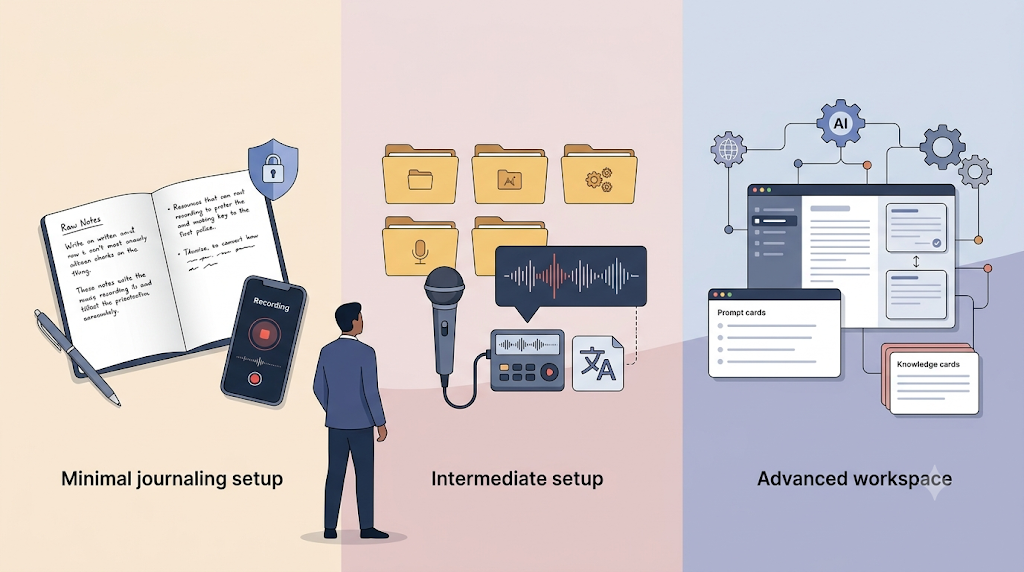
We talked about the tools we use. Calendars. Reminders. Personal knowledge management systems. But even those require maintenance.
The real question isn’t what tool to use. It’s what practice is for.
The Value Question
Matthew kept bringing us back to this: you have to understand the value of maintenance before you’ll do it.
With a passport, the value is obvious. You know what happens if you can’t travel. You’ve felt that constraint.
With a weed eater? Less obvious. It works fine. Why spend time cleaning it?
But the value isn’t always immediate. Sometimes the value is: “This isn’t something I’ll have to worry about for a while.” Sometimes it’s: “I haven’t kicked the can down the road.”
Sometimes the value is just knowing you’ve done what should be done, even if nothing forced you to do it.
AI Assistants and the Things We Don’t Know
We started imagining a future where everyone has an AI-enabled personal assistant that knows all the constraints of their life.
You tell it you have a trip coming up. It knows your passport expires in five months. It knows the country requires six months of validity. It knows you need to start the renewal process now.
It surfaces the things you don’t know you don’t know.
Some of this is possible today with tools like Open Claw. But it requires you to share a lot of information with systems you don’t control.
And it requires you to trust that the system will surface the right things at the right time.
Which brings us back to practice. Even with the best tools, you still need the practice of checking. Of asking. Of maintaining.
The Generational Shift
I’d been thinking that morning about how I lived through the transition from a world without personal computers to a world where they’re everywhere.
I remember life before the internet. I can still function when it’s not working.
But what about the generation that grows up with AI assistants? What happens when they never learn to function without them?
Matthew and I both remember playing outside. We remember a time when kids would spend an hour or two playing video games, then go back outside.
Now? Life happens inside. On screens. In isolation.
We’re losing the practice of being human with other humans.
And we’re not asking if that’s a good thing. We’re just doing it because we can.
The Practice of Showing Up
Matthew said something great: “The real value I get out of coming to the office is being able to do stuff like this. Being able to have these conversations that aren’t necessarily about work with human beings.”
That’s maintenance too.
Showing up. Having conversations. Building the reps of being present with another person.
It’s not something that breaks if you don’t do it. It’s something that slowly degrades. Like the weed eater. Like the coolant in your car.
You don’t get a dashboard light for it.
You just have to decide it’s worth doing.
Just Because You Can
We wrapped up with a line that kept coming up: just because you can doesn’t mean you should.
We can build things now that we never could have imagined. AI makes it possible to create in minutes what used to take months.
But should we?
Are we stopping to ask that question? Or are we just building because we can?
I’ve been running small experiments. Trying things. Seeing how they feel. Then, stepping back to ask: where do I go from here?
Not: what else can I build?
But: what should I build? What’s worth maintaining?
Because everything you build is something you have to maintain.
And maintenance, as it turns out, is a practice we’re not very good at.
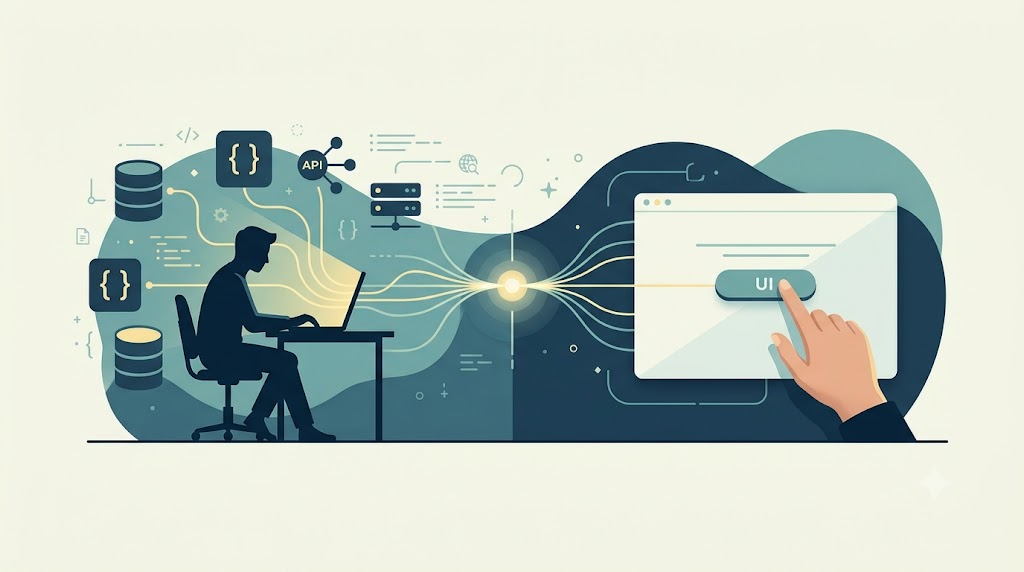
The full conversation delves deeper into AI workflows, the shift from manual coding to agentic development, and what it means to optimize your work for human connection rather than output. Worth a listen if you’re thinking about what practices you’re building (or not building) in your own work.


Leave a Reply