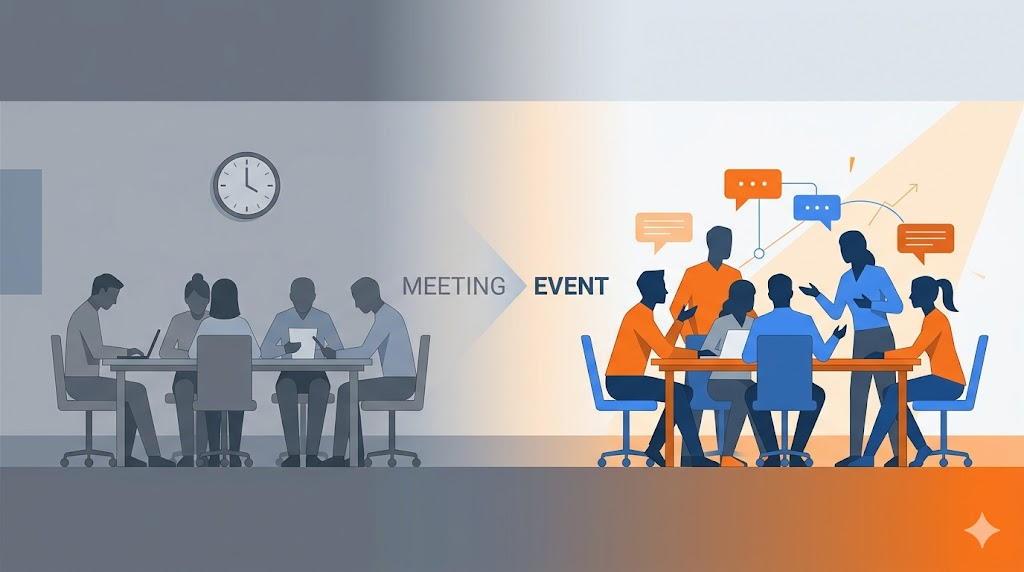
Many (most?) teams call their sprint reviews “the demo meeting.”
The language we use shapes how we think about what we’re doing.
In 2020, the Scrum Guide Changed the Language
The 2020 Scrum Guide stopped calling these “meetings” and started calling them “events.”
That’s not just a cosmetic change. It’s a signal about what these gatherings are supposed to be.
Meetings feel obligatory. You show up, sit through them, and leave. They’re often boring. They’re often wasteful. People multitask through them.
Events are different. Events have purpose. They’re designed. They’re collaborative. They’re something you participate in, not something you endure.
The Words We Use Matter
When a team calls the sprint review “the demo meeting,” they’re already framing it wrong.
A meeting is something you attend. An event is something you engage with.
A meeting has an agenda you follow. An event has an experience you design.
A meeting ends when you’ve covered the topics. An event ends when you’ve achieved the purpose.
The shift from “meeting” to “event” is a mindset shift.
What Makes Something an Event
Events are intentional. They have a clear purpose. They’re designed to create a specific outcome.
Sprint planning isn’t just a meeting where you talk about what to build. It’s an event in which the team commits to a goal and develops a shared understanding of how to achieve it.
Sprint review isn’t just a demo. It’s an event where stakeholders and the team collaborate to inspect what was built and adapt the product backlog based on what they learned.
Retrospectives aren’t just a debrief. They’re an event where the team reflects on how they worked together and commits to improvements.
Each of these has a purpose. Each of these requires participation. Each of these should be designed, not just scheduled.
Stop Treating Them Like Boring Meetings
I hear teams say, “Sprint planning is so boring. It takes forever.”
When that happens, it’s usually a sign that the event has drifted into meeting mode—going through the motions instead of designing the experience.
If sprint planning feels like a boring meeting, it’s likely being treated like one. The team is following a script rather than creating space for meaningful collaboration.
The same pattern shows up in sprint reviews and retrospectives. When people are checking their phones, multitasking, or disengaged, it’s rarely because these events are inherently boring.
It’s because they’re not being facilitated as collaborative events.
Design the Experience
When I prepare for a sprint review, I don’t just throw together a list of stories to walk through. I design the experience.
I think about:
-
What’s the story we’re telling?
-
What will resonate with the people in the room?
-
How do we create space for conversation, not just presentation?
-
What data will make sense to this audience?
-
How do we optimize for collaboration, not just demonstration?
That’s event design. It’s intentional. It’s thoughtful. It’s the opposite of “let’s just get through this meeting.”
The Language Shapes the Culture
When teams start calling these “events” instead of “meetings,” something shifts.
They start asking better questions:
-
What’s the purpose of this event?
-
How do we make it valuable for everyone involved?
-
What would make this more engaging?
-
Are we designing this or just going through the motions?
The language change isn’t magic. But it’s a nudge in the right direction.
It reminds people that these aren’t just boxes to check. There are opportunities to collaborate, learn, and improve.
A Small Shift with Big Impact
I’m not suggesting you police everyone’s language. I’m not saying you should correct people every time they say “meeting.”
But I am suggesting you think about how you talk about these gatherings.
Do you say, “We have the demo meeting at 2 pm”? Or do you say, “Sprint review is at 2 pm, and we’re going to show stakeholders the new workflow we believe might solve the buyers’ main problems”?
Do you say, “I have to sit through planning all morning”? Or do you say, “We’re setting our sprint goal this morning”?
The second version frames it as purposeful. As collaborative. As an event worth engaging with.
What would change if your team stopped calling them meetings and started treating them as events?
Many classes at Improving can help you and your organization understand and facilitate better conversations.



Leave a Reply