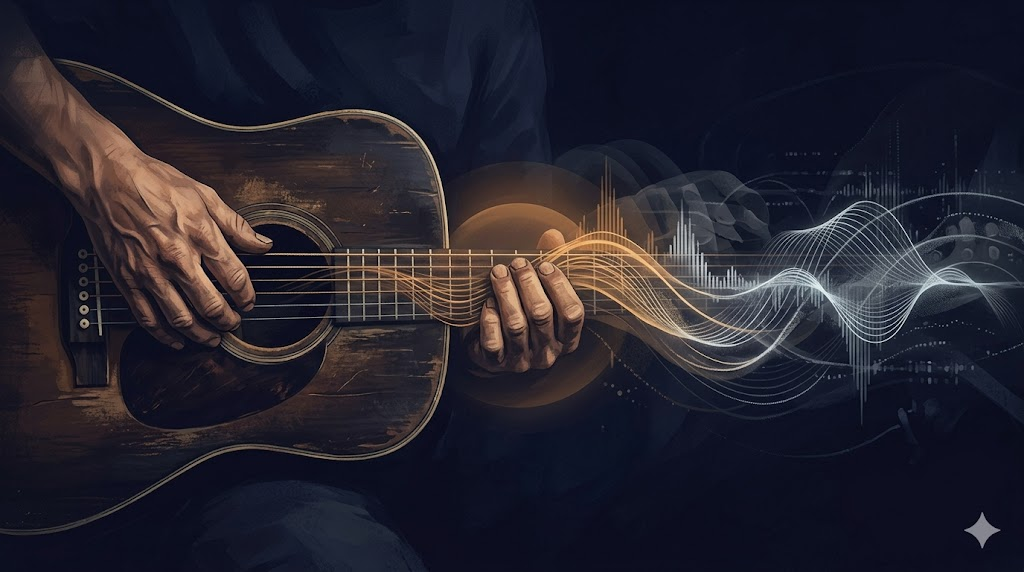
I recorded a guitar fragment in 2019, saved it in my backlog of music ideas, and forgot about it. Three years later, I stumbled on it again, and it happened to match exactly what I was feeling that week. I wrote some lyrics. Then those two things sat together for a few more years.
A few weeks ago, I finally did something with them.
The Recording
The original is just me playing into my iPhone, using a regular recording app. Two small musical fragments, each repeated once. That’s it. Something about how it sounded stayed with me enough to save it, but not enough to pursue it right then.
When I found it again in 2022, I had just finished watching From Scratch on Netflix. (I’ll spare you the spoilers.) Something about that show moved me, and when I felt like picking up the guitar to see what would come out, I listened back to that recording first. It fit exactly what I was feeling.
So I wrote some lyrics.
Bringing AI Into It
I took the audio file and the lyrics into Suno AI with a style prompt: gothic metal, progressive metal, acoustic doom, emotional weight, tension in the dark, gothic atmosphere, vast, lonely, and deeply mournful. I typed a few words and let Suno enhance the rest of the description.
It came back with two or three versions, each around two minutes long. Same voice across all of them, same vocal style and delivery, but just enough variance between them that I could pick out different choices I found interesting: a melodic turn here, a phrasing decision there. It felt like presenting an idea to a bandmate and hearing what they bring back.
The style landed near Poison Black, a band I’ve enjoyed for over twenty years. Low voice, simple driving guitar riffs, a push into a slightly higher register without going over the top. That’s a space I’ve written music in before. When I heard it, something clicked.
What This Is Actually For
Here’s the part I find most useful, and why I’m writing about this.
I’ve sung my own music before. I know my current limits fairly well. And when I listened to these versions, I kept noticing specific techniques I don’t know how to do yet: a soft, airy delivery in the opening lines with a subtle fry quality that makes it feel organic; compression added to certain phrases to give them weight; transitions from chest voice to head voice in ways I can hear clearly but can’t yet replicate.
These aren’t abstract concepts. I’ve been watching vocal coaches explain them on YouTube, and hearing them applied to my words and my chord progression made everything concrete. I know where I’m aiming.
More practically: instead of spending weeks recording guitar, bass, and drums just to have something to sing along to, I can download the stems from Suno, mute the vocal track, and start practicing right now. The scaffolding is already there.
The Embarrassing Part
I’ve been recording my practice sessions on my phone. The quality is rough. The early attempts were hard to listen to: pitch wandering, voice cracking, vowels and consonants not quite landing the way I want. English isn’t my first language, and that shows more when I’m singing than when I’m speaking.
But it’s getting better. I can hear it. And because I have a clear reference of what it could sound like, I know exactly what I’m working toward. Not to copy the AI version, but to absorb the techniques and make them mine.
No auto-tuning. No cleaning up the rough edges. I want the real version of this process, because I’m doing it for my own enjoyment.
Where This Goes
This will probably become one of my own songs eventually. I’ll record the guitar parts myself, adjust the riffs, and sing it the way I want to sing it once I’ve practiced enough to get there.
That might happen in a few months. It might take a few years. I genuinely don’t mind. What I’m learning is that AI doesn’t have to replace the creative work or shortcut the effort. It can accelerate your path to it, if you bring something real to the table first.

Leave a Reply