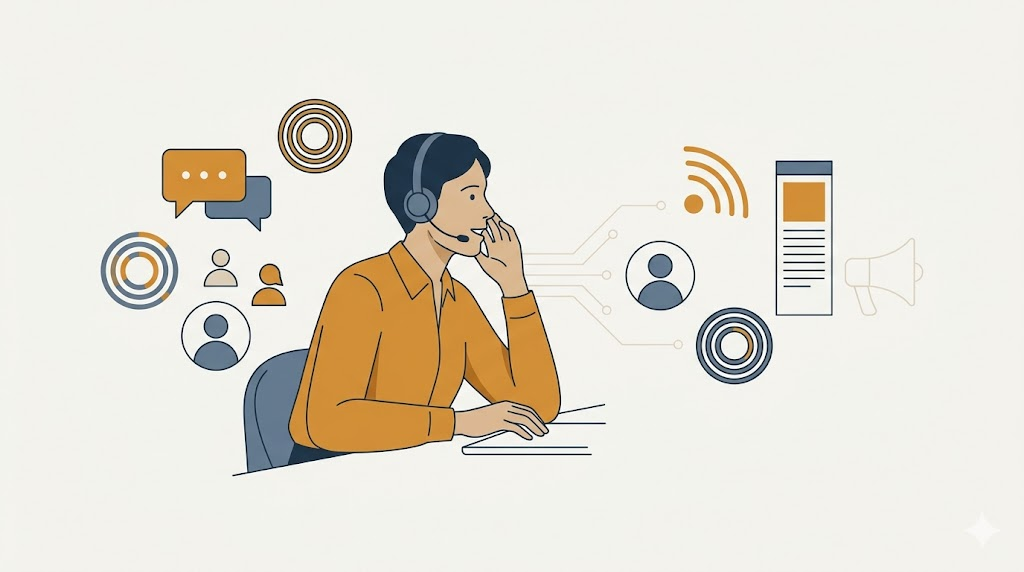
A user acceptance testing session gave me a new way to think about reskilling.
The room had people from different parts of the organization. Some of them were on the customer support team. We were testing a system that had been in development, one designed to be intuitive enough that users would rarely need to reach out for help. The goal was to reduce the friction people experienced with the old process.
The support team was worried. If the system worked the way we intended, they’d be fielding fewer calls. And they read that as: fewer reasons to need us.
The Question That Shifted Things
I asked them directly: “How much do you enjoy getting calls from people who just want to know how to save a record? Or where to find a button?”
They laughed. “We hate those.”
Those calls weren’t the job. They were the overhead on top of the job. The actual job, the part that required skill and relationship, was talking to customers about real problems. Understanding what they needed. Being the voice on the other end that knew their situation.
That part wasn’t going away. It was about to have more room.
What They Already Knew That the Experts Didn’t
This is a pattern I’ve seen more than once: somewhere else in the organization, people are being paid to figure out how to communicate with customers. And they’re mostly guessing. They don’t know the industry well enough. They don’t know the customers’ terminology, their rhythms, what frustrates them, or what they care about.
The support team knows all of that. Years of conversations give them something no outside team could easily replicate: real knowledge of the people they’re serving.
That’s not a small thing. That’s an asset.
What if the work they were already doing — listening to customers, understanding their needs — became the foundation for a different role? Product feedback. Customer insight. Helping drive what gets built next.
Where AI Fits
AI has a practical, immediate role here. Some tools help capture and summarize conversations, identify recurring themes across many customer interactions, and surface patterns that would take hours to find manually. Support teams already have the relationships and the instincts. AI helps them do more with the information those relationships produce.
It starts from what someone is already good at and extends it in a direction that creates more value. The skills already there are more transferable than they might appear.
A Different Way to Think About “Displacement”
The loudest conversation around AI and jobs is about what’s being taken away. Fewer repetitive calls to handle. Fewer forms to walk people through. That’s real.
The better question is: what does this create space for?
If the mechanical part of a job is handled more efficiently, what’s left is the human part. The judgment calls. The relationship-building. The listening that turns a complaint into a product insight. Those aren’t being automated. They’re being surfaced.
The people who do well here aren’t necessarily the most technical. They’re the ones who’ve been paying attention to the people around them, building the kind of trust that doesn’t show up in a system log.
Most reskilling starts with something you already know how to do. The tools just finally catch up.



Leave a Reply