
I write and publish every day, and I do it on the cheapest AI model I can find. That sounds like a compromise, and it was at first. But over time I learned that the model is not what makes the writing good. The skills are. The cheap model is the proof, because it is doing the work that a much more expensive model used to do.
The moment I decided to cut the cost
Earlier this year I was using a strong, more expensive model for the heavy lifting: drafting, editing, and the image prompts. It worked well. Then the AI usage started showing up in our dashboards, and I looked at what I was spending and decided it had to come down.
I did not want to stop producing. I wanted the same output at a fraction of the price. So I switched the daily work to the cheapest model I had, and I let the cost decide. For a while before that I had been using a model that was effectively free, and that was great until it became a paid product. It was still cheap, just not free. From there I went to the cheapest option I could find.
The first few attempts were not great
I am not going to pretend it was smooth. The first attempts with the cheap model were rough. The drafts needed a lot of work, and I had to be honest with myself that I could either give up on the idea or I could fix the reason it was rough.
The reason it was rough was my skills. The instructions that told the model how to draft, how to edit, and how to write in my voice were not good enough yet. So I kept refining them. I worked on the draft skill, the edit skill, and the writing-style skill, and I iterated. Each time, the output got a little better, until the cheap model was producing work I was happy to publish.
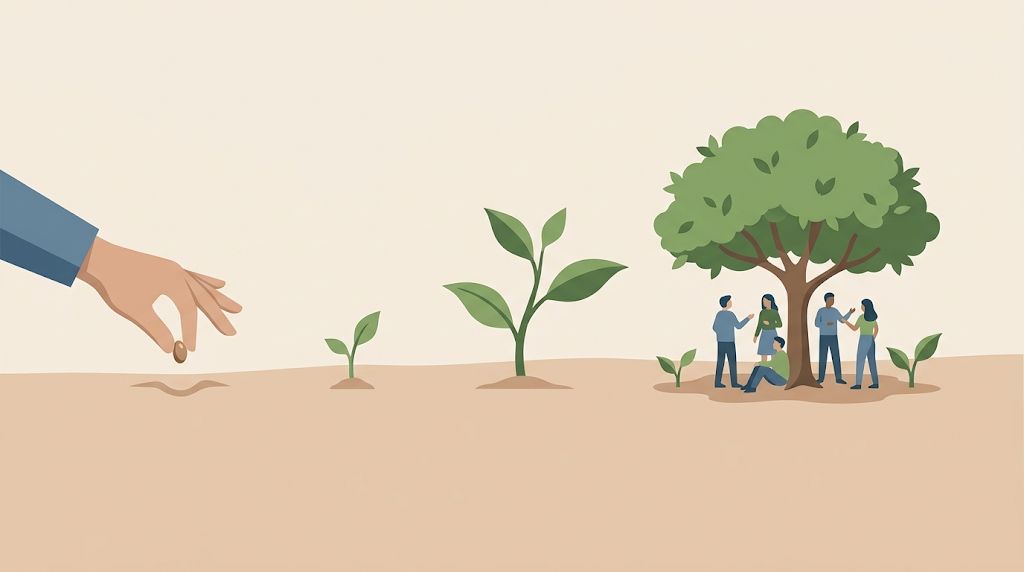
The quality does not live in the model. It lives in the harness around it. Give the cheapest model clear, well-tested instructions and it will do a surprising amount of the work.
I did not wait for perfect
One thing I am glad I did is not wait for the skills to be perfect. I published anyway. I put out a post, saw what came out, made a small improvement to a skill or to a draft, and put out the next one. The next post was a little better than the last.
If you read a post from six months ago and compare it to one from this week, the quality is different. That is not a problem. It is the record of me getting better, and I can look back at it and see how far the system has come. Publishing through the rough patches is what let me improve the system instead of theorizing about how to improve it.
The next step is even cheaper
I am not done cutting the cost. The plan is to run more of this work locally, on my own machine, using a small model. It will be slower, because my computer is not powerful enough to run a big model well. But it does not need to be fast, and I am not in a hurry. I can start it and let it run on the side.
The useful part is that my harness lets me choose a model per step. I can use a small local model for the parts that do not need much power, and keep the stronger model only for the step that actually needs it. That is the future of this for me: not one expensive model doing everything, but the right tool for each part of the pipeline. It is the same principle as the rest of the system, which I described in the earlier installment on how the system evolved. The point is always to remove friction from the parts I do not enjoy and keep the cost sustainable, so I never have to stop.
Expensive models are convenient, not necessary. The thing that makes the work good is the process around the model, and that process is something I can build and improve regardless of which model I run it on. I started with a model that cost more, and moved to one that cost nothing, then moved to one that cost little, and I am working toward running more of it locally at almost no cost at all.
That matters more than the savings themselves. Because I know I can produce well on a cheap model, I know the writing will not stop when the next model gets more expensive. The cost is a dial I can turn, and the quality holds because it lives in the skills, not in the price tag. That is a much more sustainable place to build from.



Leave a Reply