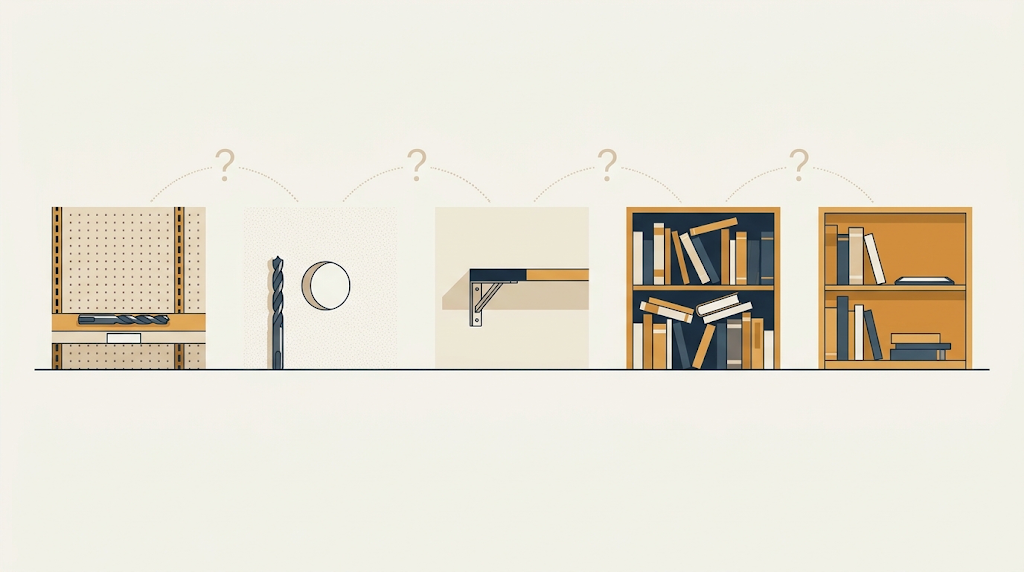
Nobody walks into a hardware store wanting a quarter-inch drill bit. They want a quarter-inch hole. Don Norman wrote that in The Design of Everyday Things years ago, and it comes up in almost every conversation about understanding what people need.
“They want a hole” is only one question further down. Keep asking why and the hole stops being the point.
Keep Asking Why
Someone buys the drill bit to make a hole. Why do they need the hole? To mount a bracket. Why the bracket? To hang a bookshelf. Why a bookshelf? They have more books than places to put them.
That’s where the real need shows up. Standing there, the drill bit is one answer among many. Maybe they need shelves. Maybe they need fewer books. Maybe e-books would do. Maybe there’s a pile of books they’ll never open again, and donating them frees up the space they already have.
Look at what happened. The first answer was a want. The need was four questions further down, and the thing they walked in asking for turned out to be one option out of several.
The First Answer Is the Want
Most requests I hear sound exactly like the drill bit. We need this feature. We need a dashboard. We need a database. Each one is a solution dressed up as a requirement, and each one carries a bill: money, time, and maintenance.
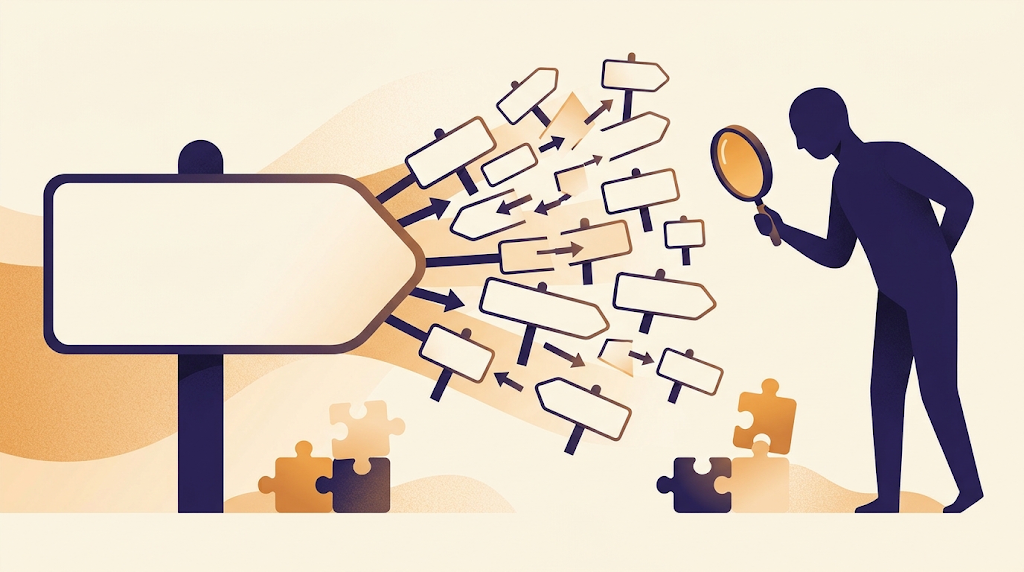
Arguing with the request doesn’t help. Asking why until the answer changes what you’d build does. When the answer makes you say “oh, there’s another way to do this,” you’ve found the need.
That shift also explains a lot of failed projects. Someone asked for a drill bit, got a beautiful drill bit, and the shelf still isn’t on the wall. The build was fine. The question was wrong.
A House Is Not Housing
Here’s a bigger version. People don’t need a hammer. People don’t need a house. People need housing.
Once the need is housing, the options open up. Buying is one. Renting is another. Moving somewhere cheaper, where the rest of life fits better, is another. And sometimes housing means more than a roof: schools, commute, family, a neighborhood where they can breathe.
The same pattern shows up in software. Someone needs a report, so the answer is a report. Ask why and it turns out they need to make a decision by Friday, and a two-minute conversation answers it. Someone needs a database, so the answer is a database. Ask why and it turns out they need to remember what happened last month, and a log file does that.
Why We Stop at the First Answer
If the deeper question is so much more useful, why do we keep accepting the drill bit?
The first answer is concrete. It’s easy to price, schedule, and hand off. “I need a shelf” fits in a backlog. “I have too many books” is a conversation that goes somewhere uncertain.
We’re also trained to be helpful. Someone asks for something specific, and the fastest way to look helpful is to say yes and start building. Asking why can feel like stalling, or like telling someone their request is wrong.
It also takes a little courage. Sometimes the answer is “I don’t know, I assumed that’s what we needed.” Uncomfortable to land on. Much better to land there before three weeks of work than after.
The Habit I Built
When someone tells me what they need, I treat the first answer as a starting point. Not to challenge them, and not to show how clever I am by finding a different solution. Just to see whether the conversation changes what I’d build.
Most of the time it doesn’t. The drill bit really is the right answer. But now I know what it’s for, which means if the shelf falls off the wall next month, we both know what we’re actually trying to fix.
The questions are simple. What will you do with it once you have it? What happens if you don’t? What would make this unnecessary?

Leave a Reply