A checkbox showed up on a screen in one of our products years ago. I asked the person who announced it what it was for. The answer was, “I don’t know, but isn’t it great? It’s a new feature. Let’s celebrate.”
I don’t remember what that checkbox did or where it sat on the page. I remember the answer.
The problem wasn’t the checkbox. The problem was that nobody could say what need it met.
The feature nobody asked for
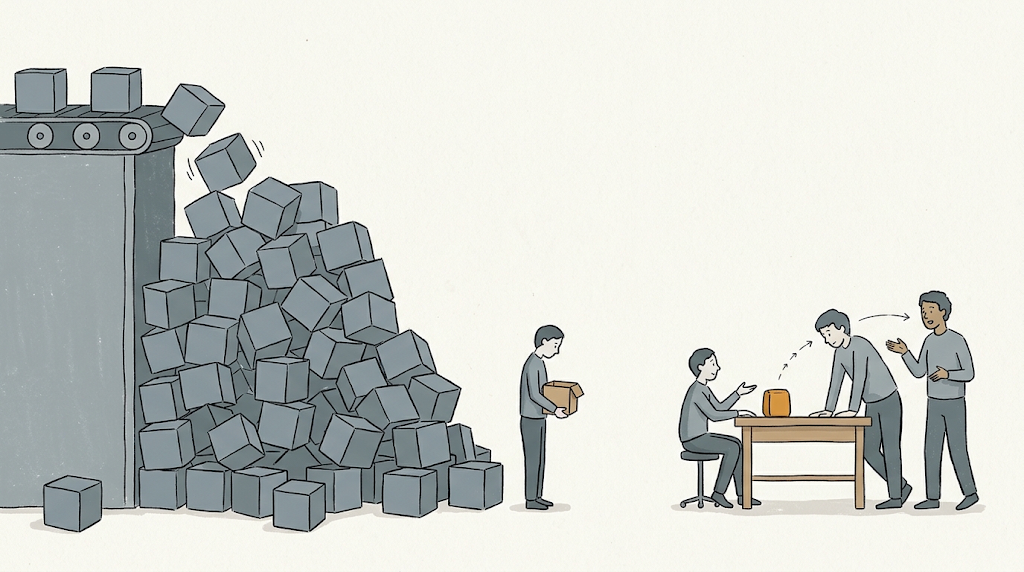
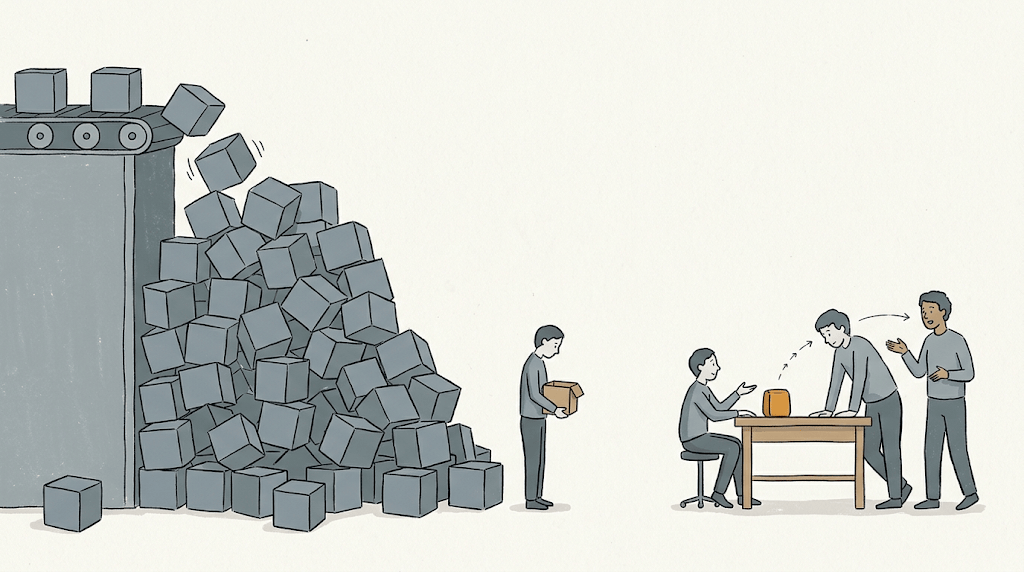
I’ve seen the same thing happen with much bigger features. A tool gets built, tested, and deployed, and then it sits there. People scroll past it. Some of them notice it exists, click into it once, and never open it again.
The build went fine. The tests passed. The release notes went out. Nobody uses it.
I’ve also been on the other side of this, building something because the technology was interesting or because the platform made it easy to add. It’s a satisfying way to spend a week, and it says nothing about whether anyone needed the result.
The feature itself is rarely the problem. The problem is everything that has to exist around it.
A feature is only half the work
Shipping the code gets you a working feature. It doesn’t get you anything else the feature needs in order to be used.
Think about what surrounds a tool that actually gets adopted:
- Someone explained what it was for before anyone saw it.
- The message came from a place people pay attention to, not from a release note.
- People were shown how to use it, by someone who knew.
- The questions it raises had answers ready before it went live.
None of that shows up in a pull request. All of it decides whether the feature gets used.
Traction comes from above
For anything meaningful to get adopted, the message has to come from the top.
The people running the company need to stand up at a town hall or an all-hands and talk about it. When they do, they need to talk about the needs it fulfills, not the future it promises. “This will help you do something you already struggle with” lands differently than “we’re excited to announce an upcoming feature.”
Build a prototype, not a feature
When a feature looks like a good idea, but nobody can make the case for it, the answer isn’t to build it anyway. Build a prototype instead.
A prototype lets you put the idea in people’s hands before you commit to it. It’s cheap, it’s disposable, and nobody has to sit through training to try it. Then you make the case: here is the problem this solves, here is the need it fulfills, here is what people did when they tried it.
Does the story get retold?
Once you have a prototype, tell someone the story. Then wait and see whether they tell it to someone else.
That’s the test I care about. If the person you’re talking to turns around and describes your idea to a third person, unprompted, you’re onto something. If you have to keep explaining it, or they nod politely and change the subject, the idea isn’t there yet.
This works best on your own problems. If something frustrates me every day and I build a fix, I’ll know whether it worked. I’ll feel it, and I can back it up with data and observations.
That’s a strong starting point. The next question is whether the problem belongs to anyone else. If the people around me have the same frustration and the story connects with them, then I can package the solution for them. Because I’ve been listening to people, I know who they are.
Listen more than you prompt
It’s easier than ever to build things. Anyone can have an idea, prototype it in an afternoon, and put it in front of someone before committing to a bigger effort. That’s good.
The trap is that it’s now easy to build a lot of things nobody needs. The faster it gets built, the more time I need to spend on why I’m building it.
So spend less time talking to AI and more time listening to people. That’s where the needs come from. My best ideas have almost always started with someone describing a problem to me, or with me observing them and their environment, not with me staring at a prompt.
I’d rather ship one thing someone needed than five things I could build.



Leave a Reply