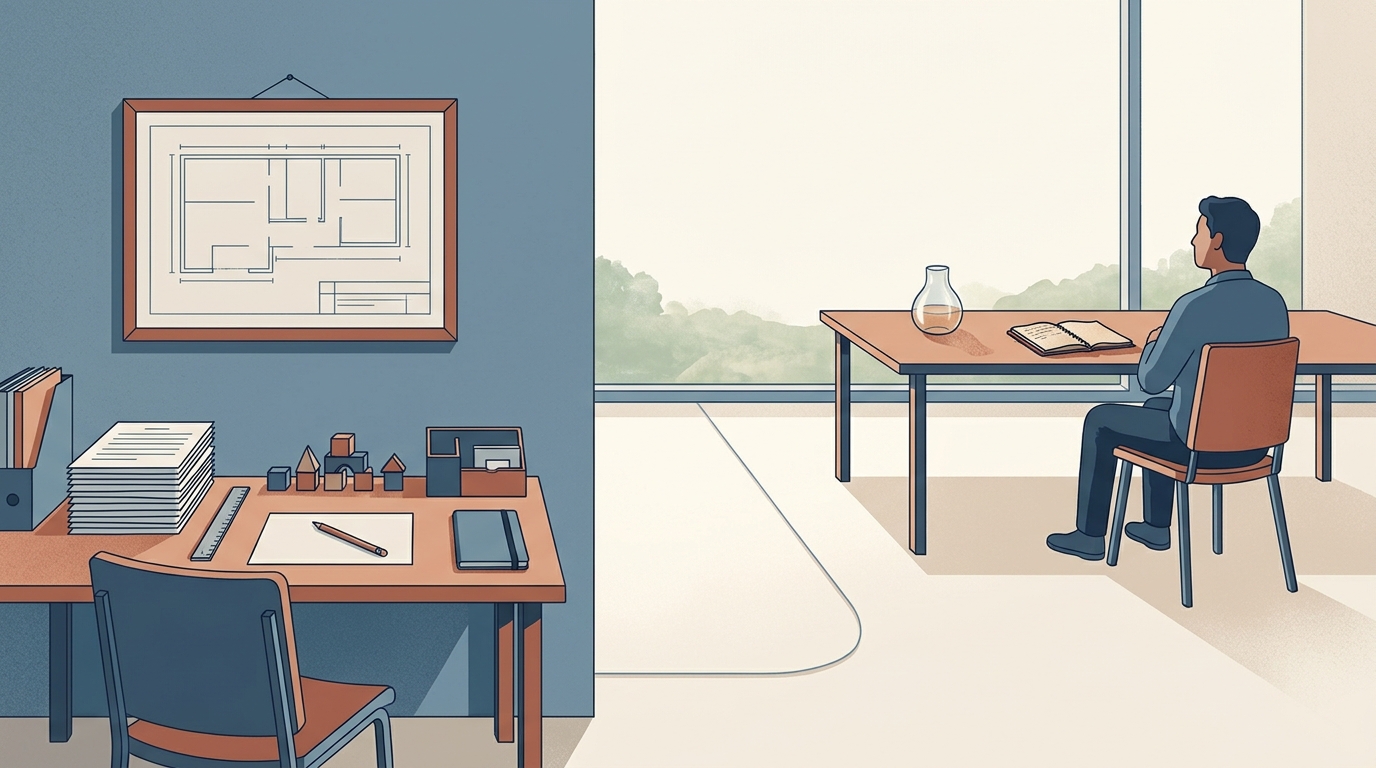
I was in a conversation about how AI tools are changing the way we work. The advice on the table was to redesign our workflows. The way we build things is going to change, so the processes around it have to change too. I agreed with all of it, and then I suggested taking a step further back.
Don’t just redesign your work. Redesign your life.
The workflow question stops too early
Redesigning a workflow is a good question, but it starts from a fixed point. It takes the work as given and asks how to do that work differently. Faster loops, less manual effort, a different sequence of steps, different tools along the way. All of that matters, and I’ve done plenty of it.
What it doesn’t ask is why I’m doing this work in the first place.
When the tools shift this much, the workflows are the first thing to give. The bigger question is what I want my days to be made of, and how much of that shape I’m willing to let the tools decide for me.
What I’m optimizing for
I don’t write tests to prove my code works. I write specs that capture our shared understanding of a client’s business. I wrote about that a while back. It’s a decent example of the pattern: the visible activity isn’t the thing I care about.
I’m not optimizing for producing ten times more code than I used to. I’m not optimizing for building feature after feature. What I care about is listening to people describe the problem that’s blocking them, digging until I understand what they need, putting something in front of them that confirms it, and watching them tell that story to someone else afterward.
The code is a means. The story people tell about the work is the end.
If AI helps me get there, I’ll take it. If it doesn’t fit the problem, I won’t force it.
The part I want to keep doing
So the useful question is narrower: which parts of this work do I enjoy enough to keep doing, even if a tool could do them?
Some of it is easy to hand over. Tasks I know how to do but don’t like doing have been on the outsourcing list for years, long before AI entered the picture. There are also things I don’t know how to do and don’t need to learn right now. AI covers those too.
The harder list is the other one. The conversations. Asking the next question until the picture sharpens. Sitting with someone while they describe a problem that’s been frustrating them for months. Those are the parts that energize me, and they’re the parts I’d want to keep even if the economics changed.
I’d rather be deliberate about that list now than discover it by accident later.
When the market stops paying for it
What if a part of the work I love stops being something people pay for?
I don’t have a tidy answer. What I do have is the glassblowers.
I’ve written about them before, in Software Worth Talking About: From Gooey Glass to Glowing Code. People take time out of their lives to stand and watch someone blow glass. They’re amazed by the craft. They pay for the product. And then they tell other people the story of how the gift was made.
The work is slow and hard and not the cheapest way to make a glass. The story is why people show up. Great stories get retold.
I don’t know if the market will keep paying for the version of my work I love. I’m not going to wait for the market to tell me. I’d rather know now which parts I’d keep doing anyway, and make room for them while I still have the choice.
The question I keep landing on
Which parts of the work would I keep doing even if no one paid me for them, and what would I do about it if that day came?
The workflow question has a short answer: use the tools, learn the tools, adapt. The other question doesn’t, which is probably why it’s worth asking.

Leave a Reply