Lately, I’ve noticed a recurring theme in conversations with other developers: resistance to using AI tools. I’ve heard things like, “I tried that—it just created trash,” or “I can code faster myself.” But I keep asking: what exactly did you try? What did it produce? What were you expecting?
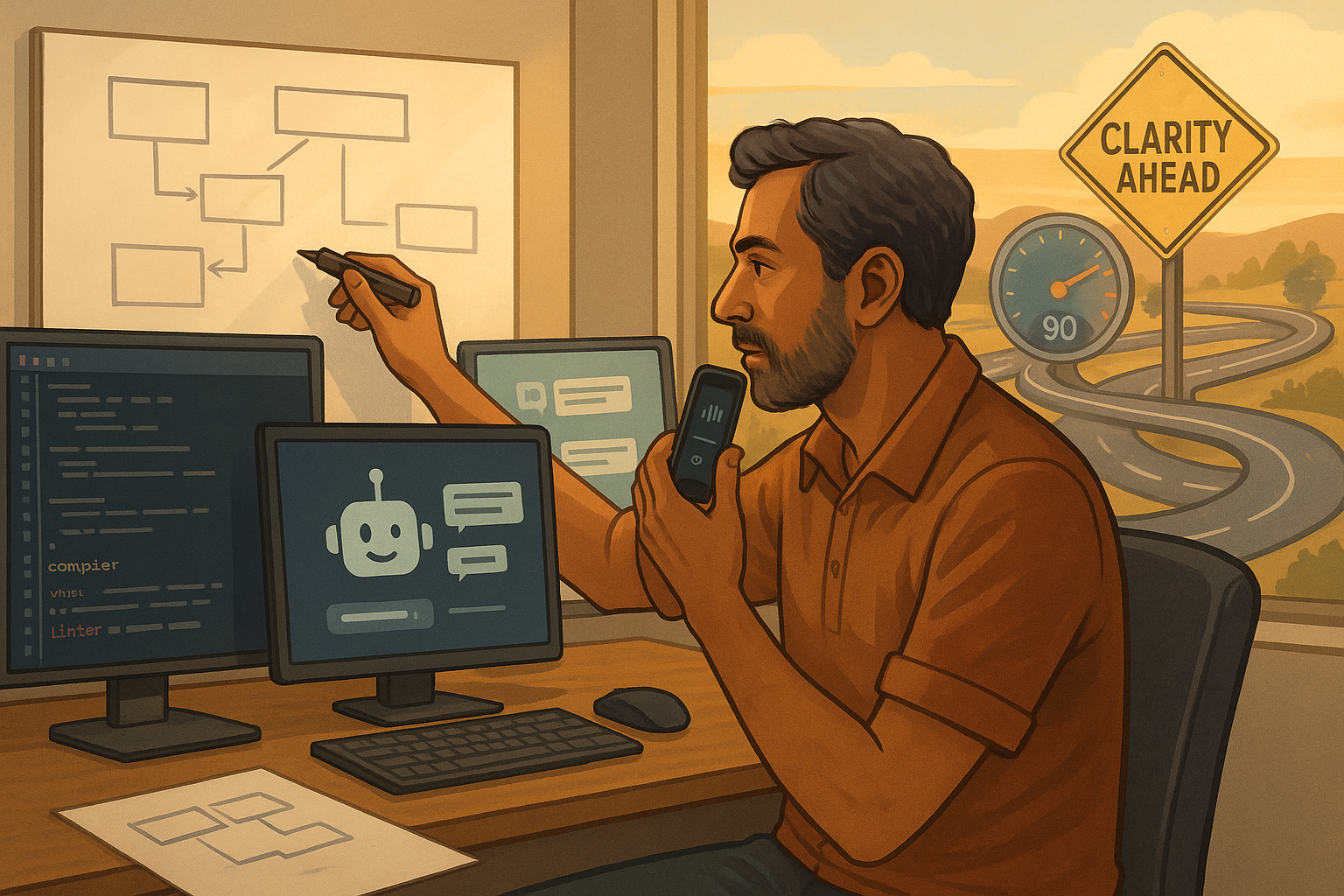
One analogy that stuck with me came from a book I read: your speedometer might show you’re going fast, but you could just be driving in circles. Are we really going somewhere faster, or are we just typing faster without gaining clarity?
(If you prefer listening to reading)
When I hear someone call AI-generated output “trash,” I want to understand what process they used. Was there clear context? Were they expecting it to work flawlessly on the first try? Because that’s not how we evaluate humans—we collaborate, clarify, and iterate. Why not apply the same process to AI?
As developers, we’ve always used tools to assist us. We lean on the compiler to catch syntax errors. We rely on linters to help us maintain coding standards, identify potential bugs, and flag security concerns. These tools don’t replace us—they amplify our ability to write quality code. AI is the next evolution in that support structure: a tool that works with natural language, logic, and intent.
In my code review process, for example, I start with the story, check the tests, then dive into the implementation. I assess if the tests match the story and cover edge cases. I’ve started documenting this so that when I bring in tools like Cursor, I can say: here’s what I normally do—now help me with that. I expect it to help me scale my perspective and spot things I might miss.
This same approach changed how I journal. Typing led to over-editing, which is a form of resistance for me. So I started using a voice-to-text journaling app. I just speak, get it all out, and edit later. That simple shift helped me be more honest and more consistent. The friction was gone.
Recently I gave a talk to a group of business analysts. After walking through my usual process for writing user stories and facilitating conversations, I did a quick demo. I drew a UI sketch on the whiteboard, recorded my spoken description into ChatGPT, snapped a photo of the sketch, and said: “Generate stories.” Within minutes, I pasted the output into Google’s AI Studio, and voilà—we had a prototype. Everyone in the room could see the ideas taking shape. They leaned in, excited.
That moment showed me something powerful: the resistance we carry often melts away when we see what’s possible. It’s not about typing faster. It’s about thinking better, communicating better, and getting feedback faster.
To truly evaluate these tools, we need to:
- Articulate what we’re trying to do.
- Define how we’ll measure success.
- Treat each use as an experiment.
- Document what we tried, how it felt, and what we learned.
When we frame it like that, we move from judgment to curiosity. We stop asking, “Is this trash?” and start asking, “What didn’t work, and how could I guide it better?”
That’s what I want others to feel: empowered. Not threatened. Curious, not defensive.
Try it. Honestly. Deliberately. Make a plan, run an experiment, and write down what happens. That’s the only way we’ll get past the resistance—and toward better collaboration with these tools.
This reflection is based on my thoughts during a recorded conversation with a fellow developer at Improving. We explored resistance, experimentation, and the mindset shift needed to work well with AI tools.



Leave a Reply