The Interview I Never Forgot
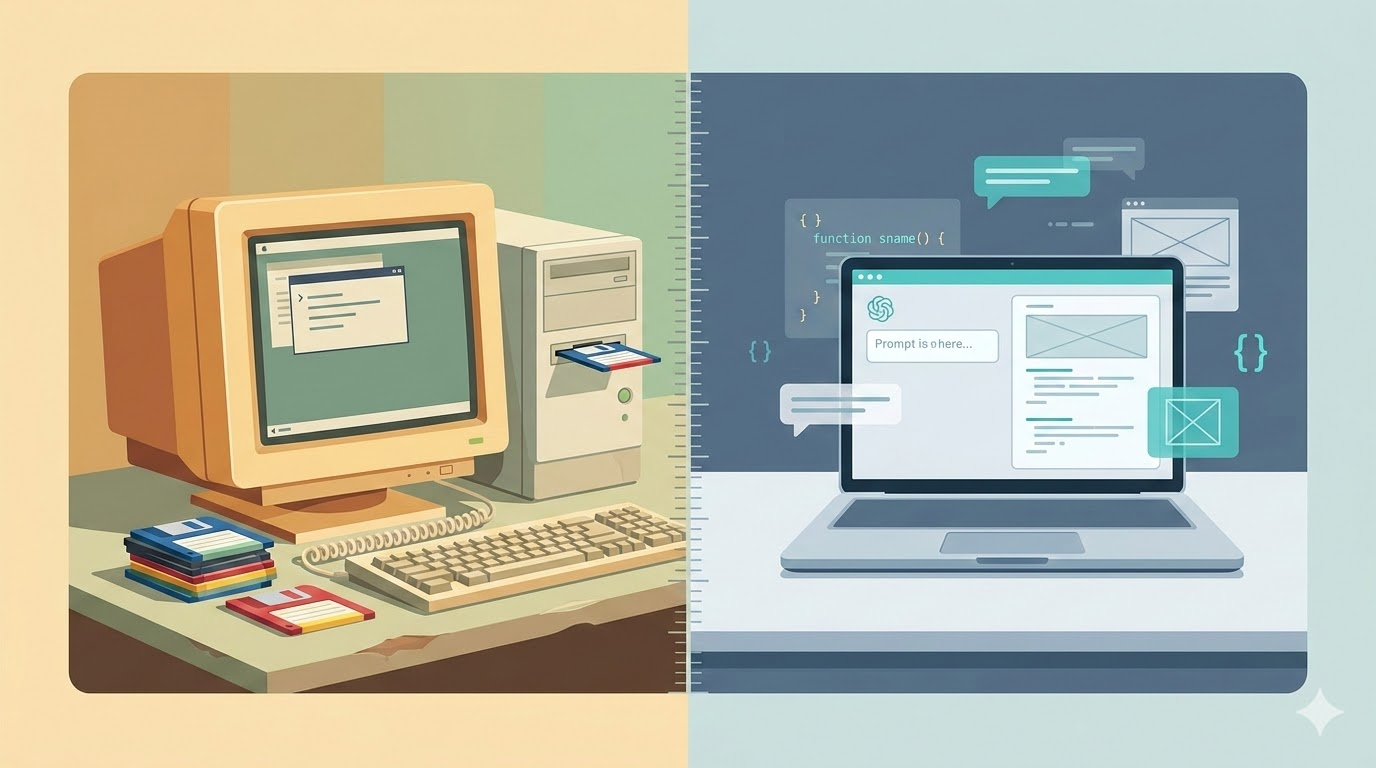
Back in the late 90s, I was interviewing candidates for a FoxPro developer position. One candidate showed up in a nice suit, spoke confidently throughout the conversation, and stopped me when I mentioned we’d move to the technical portion. He said the technical part wasn’t necessary. Everything I needed to see was on the floppy disks he’d brought. He handed them over and left.
I remember being puzzled as I slid the first disk into the drive.
I launched the application. The UI looked familiar. Oddly familiar. I opened the source code. There wasn’t much to look at. I moved on to the second disk. Same story: a familiar-looking app, almost no code. I never bothered with the third.
What I’d found was FoxPro’s Application Wizard at work. That tool could generate a complete CRUD application (database, forms, menus, reports, labels) without a single line of custom code. All those apps looked the same because they were the same: form over data, VCR-style navigation buttons, a read-only view with an edit toggle. What changed was just the data they exposed. No business logic. No custom decisions. Nothing that revealed the mind of a developer.
The Average Problem
FoxPro’s wizard wasn’t inherently bad. Plenty of developers used it as scaffolding: a starting point to get something running quickly, and then they’d layer in business rules, custom flows, and real decisions. The wizard was a tool. The problem wasn’t using it. The problem was submitting it as your own work and expecting it to speak for you.
What the candidate showed me — or rather, left for me to discover — was the absence of craft. There was nothing there that said, “This is how I think about problems.”
Now Fast-Forward to Vibe Coding
I’ve been watching the vibe coding wave with that old interview in mind.
Today’s AI tools can generate a full-stack application from a few prompts. The UI will be clean. The code will compile. It might even look impressive at first glance. And just like those FoxPro wizard apps, many AI-generated applications share a familiar look because they’re built from the same training data average.
Open the code, and it looks… average. Expected. The kind of output you’d get if you described a generic solution to a model that learned from a million generic solutions.
That’s not a knock on AI. It’s just how it works. The model produces the mean. What you do around and with that output is where the craft lives.
The Shift in What to Look For
Here’s what I keep thinking about: if that same candidate walked in today with AI-generated projects instead of floppy disks, what would give him away?
Probably the same things:
-
Applications that look exactly like every other AI-generated app
-
Code that reads as if it came straight out of a default prompt with no opinions applied
-
No evidence that the builder shaped the solution around a specific problem
But those same signals could also be overcome. You can work the prompts, load the context, inject your opinions, your architectural preferences, your understanding of the domain. You can ask the AI to build software in the style of someone whose thinking you respect. You can constrain it, redirect it, and push it past average. The output of a thoughtful, opinionated builder using AI will not look like the output of someone who just typed “build me a CRM.”
What We’re Actually Evaluating Now
This changes how I think about assessing developers, or anyone building software.
The question used to be: Can you write code?
Then it became: Can you design systems?
Now it might be: Can you direct a solution? Do you have opinions about it? Did you actually engage with the problem?
Because the floor has risen. Anyone can spin up a working app. What we’re looking for is evidence of care, judgment, and ownership. Can you talk about the tradeoffs you made? Can you explain why the architecture looks the way it does? Did you push the tool beyond its defaults, or did you just accept what came out?
The floppy disk test still works. The disks just look different now.
How do you evaluate craft in a world where the baseline keeps moving?


Leave a Reply